Model 3 Emulator / Supermodel (2011)
.jpg)
.jpg)
Supermodel
The first attempt to create a Model 3 emulator was around March 1999, but the project did not move forward due to a lack of ROMs and dumped information about the board. At the time, it was said that the project was headed by an important emulator programmer (who could that be?). A second attempt occurred in August 2001, but it seems that it did not bear fruit due to a lack of ROMs or protection/encryption of them, as well as schematic information about the board. Finally, around August 2003, the Sega Model 3 project emerged, with its Model 3 Emulator. At the time, it was already in a considerable state of development and already had games running (such as Virtual On, Scude Race and Lost World), with sample images and everything else, but there were only six games in total ripped from the internet for testing, which made its progress difficult. At the time, its creator did not want to reveal his identity in the email he sent to the website retrogames.com talking about the project. We later discovered that it was Bart Trzynadlowski, creator of the old Mega Drive emulator, Genital, in 2000. For this project, he had the help of Finnish Ville Linde, creator of Project Tempest for the Atari Jaguar in 2002, and Stefano Teso, creator of the SSE project for the Sega Saturn in 2002. He had even helped Stefano with his project in question in 2001. Ville is the one who is mainly responsible for dumping the games. At the time, its creators reported that all the progress made did not come from any hardware documentation, even asking for a donation of a Sega Model 3 for the development of the emulator. The project was posted on the website of dumper/ripper The Guru in 2003 (who also worked on the MAME project), and had its own page in 2004 on the System 16 website.
.jpg)
.jpg)
.jpg)
Front-Ends: Supermodel UI, Supermodel XTASSY FE and Sega Model 3 UI
In November 2003, Virtua Striker 2 and Virtua Striker 2 '98 also began to work on the emulator. In April 2004, the project changed its name to Supermodel, moving to MAME in August of the same year, thus continuing its evolution into a project with greater support, given its complexities. These four months between April and August were probably a migration for the project. Because of this, its website was abandoned between March 2004 and February 2006, when they announced the inclusion of the same in MAME, and closed the domain. In compensation, the project's updates continued on the Guru website until January 2009, when of the 29 games on the board, 23 were already running, of the other 6, 4 were not dumped, and 2 were poorly dumped. In MAME, Ville helped alongside Stefano and Bart to add the PowerPC 403 processor, created by Aaron Giles to run the arcade. Although it was not the Model 3's processor, it helped emulate it later. The trio did not continue working on the project within MAME, with only Ville remaining in the multi-emulator working on other arcades. Still on MAME, the Model 3 began to run games on the emulator in January 2005, with Scude Race and Lost World. After a long time on MAME, almost 7 years, the independent Model 3 emulator, Supermodel, was finally released in April 2011 for Windows. The emulator was developed in SDL, a free multimedia library that can be run on several other systems, such as Linux and MacOS X, for example. It also releases its source code. The emulator also has OpenGL graphics support. During this phase of the project, Nik Henson and Richter Belmont were mainly involved in some assistance.
.jpg)
.png)
.jpg)
Front-Ends: Supermodel Loader, ASMG and Supermodel GUI
Improvements over MAME are in graphics, lighting, shading in 3D graphics, and precision in 2D graphics, in addition to better game compatibility. The emulator ran a total of 27 games, in addition to revised and cloned versions of the same games, and other derivatives of the board, such as the Sega Model Step 1.5 and Step 2.0 (there were four in total, 1.0, 1.5, 2.0 and 2.1). The project also had the help of ElSemi from the Model 2 Emulator with technical information and others, Richter Belmont from the Sega Model 1 Modeler, with codes and libraries related to audio, M1 for the ports to MacOS X, Naibo Zhang, for his work on the Model 3 graphics, The Guru for dumping games from the board, Charles MacDonald, from the System C2 Emulator, for information on the Sega System 24 board for which he also created an emulator, among others. Despite all the evolution and advancement, the emulator is quite difficult to run. Since it lacks a GUI (interface), it runs through text commands, with files in DOS mode. Several front-ends were made by fans, such as Supermodel XTASSY FE and Generic GUI in April 2011, Supermodel Loader in September 2011, ASMG (Another Supermodel GUI) in December 2011, Supermodel UI in September 2013 and Sega Model 3 UI in April 2019. Its last release was in September 2011, with four releases in total. A version 0.3a was planned, but was never released. In its place, monthly development (WIP) versions were released from 0.3 in December 2020 onwards, for a total of 163 versions released. These WIP versions are released to this day (last checked date, November 2024). The site's news was updated until its two-year anniversary in April 2013. Its only updates were the 0.3 WIPs in the download section.
Other Emulators
.jpg)
.jpg)
.jpg)
.jpg)
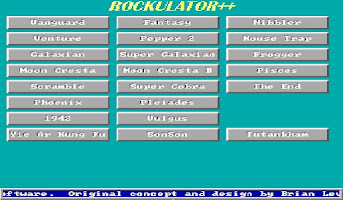
In addition to the emulators already mentioned, we have many others, among them we start with the multisystem emulators for MS-DOS, such as AAE - Another Arcade Emulator (based on Retrocade and created with the same objective as MAME, with 62 games, practically half of which are clones, produced from 1979 to 83), XPac (expanded version of Mike Balfour's Mini-Pac emulator, which was a path to MAME, with games with the same mechanics, with 11 games produced from 1980 to 82), PCSloMo (with 22 games produced from 1977 to 85), MFME - Fruit Machine Emulator (which emulates several European and British slot machine arcades, running 32 games/arcades in total), Mimic (with 26 games produced from 1978 to 88, in addition to the Master System, Game Gear, Gameboy, ColecoVision, Sega Mark III and Mega Drive consoles, and even tried to support NES and Sega CD), Tickle (with 27 games from 1979 to 85), Rockulator++ (with 22 games produced from 1979 to 85), Replay (with 180 games produced from 1978 to 86), Laser - Little Arcade System Emulator Releases by creator MetaFox (of classic Z80 arcades with 79 games produced from 1975 to 80, and which intended to become a multi arcade for Sega), SAGE - Superb Arcade Game Emulator (similar to William Digital Arcade, with digitized sound instead of emulated and with 28 games produced from 1978 to 85), PASMulator (running 37 games produced from 1978 to 84), YAAME - Yet Another Arcade Machine Emulator (with 22 games produced from 1978 to 84), VAntAGE (with 81 games produced from 1978 to 85), and several emulators Space Invaders, Pac-Man and similar games. As for Windows versions, we have Edward Massey's MageX (with 30 games produced from 1978 to 85), OldSpark C++ (with 16 games produced from 1978 to 85), Mjolnir (a branch of MAME version 0.100 with 27 games for the Namco System 21, System 22 and Super System 22 boards produced from 1987 to 99), Daphne (with 61 Laserdisc games produced from 1983 to 92 for various arcades), and DSP (with 35 games produced from 1979 to 88). Among many others. There were also multisystem emulator projects, such as the Arcade Emulation Repository Project in 1998 for MS-DOS, which would run all games based on the Zilog Z80 microprocessor.

As for emulators for specific arcade boards, we highlight first for MS-DOS, CINEMU - Cinematronics Emulator (from the Cinematronics arcade with 14 games), M-ulator (from the Namco Galaga arcade), GalEmu (from the Namco Galaxians arcade with 8 games), SideWay (with 21 games from the Midway 8080 board), xDragon (emulates the Data East Mec-M1 arcade with 5 games), Virtua (first Sega Model 2 emulator, which ran games without sound and without polygons, with 11 games), Sideway (emulates 18 of the 22 games from the Midway 8080 arcade), VBEmu - Visual Basic Arcade Machine Emulator (runs the Space Invaders and Space Invaders Deluxe games from the Midway 8080 board), and Demul (runs 27 Sega Naomi games). The Windows versions are Cinelator 95/Cine95 - A Cinematronics Emulator (from the Cinematronics arcade with 14 games), SledgeHammer (emulates the Namco System 21 arcade with 6 games). And Mac versions, such as Vectorama (emulates the Atari 6502 Vector arcade with 9 games).


And finally, the emulators of specific games, starting with MS-DOS ones, such as 1942, Asteroids, Black Tiger, Bombjack, ChopSuey, Cloak and Dagger by creator Dan Boris, Diamond Run, GEM (from the game Ghosts and Goblins), Ikari Warriors by creator Janne Korpela, Missile Command, Nemesis, Rishgar (from the game Rygar), Salamander, SonSon, Tutankam, Vulgus, Xevious, Yie-Ar Kung Fu by creator Janne Korpela, Boo! (from the game Ghouls 'n' Ghosts, which tried to be a multi-arcade), and many others, totaling more than 100 emulators of the genre.


Regarding emulator creators, we highlight some who had several projects in this area, such as James Rowan, Jrok, with the multi-system emulators JROK's Arcade Simulation (with the games Galaga 3, Gaplus, SkyKid, PacLand, DigDug 2, Mappy, and Super Pacman, highlighting the last three that had their own emulators also created by the author) and JROK's Namco System 1 Emulator (of the games Pacmania and Galaga88), Tony Docherty with VBEemu (of the Midway 8080 board) and VBPac (of the games Ms. Pac-Man and Pac-Man), Kevin Brisley of the Multi-Arcades Replay and Replay+, and Juan Jose Epalza, with the emulators of specific games, such as City Connection, Ladybug, Mr Do!, Mr. Do Run Run, Mr. Do's Castle and Mr. Do's Wild Ride.
Multi-Arcades (MS-DOS): AAE - Another Arcade Emulator (based on Retrocade and created with the same goal as MAME, with 62 games, almost half of which are clones), Classic Emu (with 8 games), JPeMu Impact Emulator (emulates slot machine arcades, like JPM from Monopoly), KEM - The Killer Emulator (formerly Konami Emulator, with games based on Konami's Z80 processor for Midway arcades, like Rampage, Discs of Tron, Kickman, Solar Fox, totaling 16 games in all), Laser - Little Arcade System Emulator Releases by MetaFox (of classic Z80 arcades with 79 games, and which wanted to become a Sega multi arcade), MAPEFER/Mapefer3 (of the games Ghosts n Goblins and Diamond Run), Multi Game Amulator (Amidar, Galaxian, and War of the Bugs), E++ (of the games Centipede (centepide) and Spectrum, and clones Space Invaders and Pheonix games), Multi-Gauntlet Emulator (from the Atari Gantlet arcade with Gantlet 1 and 2), Replay (with 180 games), Replay+ (with 16 games), Rockulator (with Fantasy, Nibbler and Vanguard), Rockulator++ (with 22 games), SAGE - Superb Arcade Game Emulator (similar to William Digital Arcade and has digitized sound instead of emulated, with 28 games), Virtual PCB (Centipede and Millipede (centepide and melepide) wheel), Jeff Mitchell's XCade (from the Centipede (centepide), Crush Roller, Ladybug, Pengo, Phoenix, Pleiades games, and the Pacman and Space Invaders clones), MFME - Fruit Machine Emulator (emulates several European and British slot machine arcades), Mimic (with 26 games produced from 1978 to 1988, as well as the Master System, Game Gear, Gameboy, ColecoVision, Sega Mark III and Mega Drive, and even tried to support NES and Sega CD), Tickle (27 games from 1979 to 1985), Vigasoco - Video Games Source Code (only ran PacMan, but tried to be a new MAME), XPac (expanded version of Mike Balfour's Mini-Pac emulator, which was a route through MAME, with games with the same mechanics, such as Pac-Man, Ms. Pac-Man, Hangly, Puckman, Ms. Pac Attack, Piranha, Crush Roller, and Pac-Man Plus), PCSloMo (with 22 games), InvEmu (with the games Cosmic Monsters, Invaders' Revenge, Space Invaders, Space Invaders Deluxe, and Super Earth Invasion), ZEM - Sega Arcade Emulator (runs Sega games Wonderboy Deluxe, Wonderboy in Monsterland, and Pitfall II), PASMulator (running 37 games), YAAME - Yet Another Arcade Machine Emulator (with 22 games), VAntAGE (with 81 games), The Arcade Machine (Space Invaders and Tron), Space Invader Emulator (7 similar Space Invaders), SPADERS - Multi Space Invaders Emulator (8 similar Invaders), Small Space Invaders Emulator (7 similar Invaders), Retrovaders (with 26 games), 8080A Simulator (Invader's Revenge, Space Attack II and Space Invaders).
Multi-Arcades (Windows): MageX by Edward Massey (with 30 games), Juno First (with 8 games), Vector Dream (6 Atari Vector and Atari 6502 Vector games), Arcade Emulator (12 games), 8080A Simulator (with Invader's Revenge, Space Attack II, and Space Invaders games), Winvader (9 games similar to Space Invaders), VBPac - Visual Basic Arcade Machine Emulator II (Ms. Pac-Man and Pac-Man), SNAMEW (Simulation and Non-Arcade Machine Emulator (based on MAME v0.37 b15 with 7 games), PIE - Pacman Instructional Emulator (Ms. Pac-Man, Pac-Man, and PunkMan), Phoenix Emulator (Phoenix and Pleiads), Pac Saver - Pacman Screen Saver (Pacman and Ms. Pacman), OldSpark C++ (16 games), Multiple Invaders Arcade Emulator (8 similar Invaders), Mjolnir (miol-nir) (fork of MAME 0.100 with 27 games for the Namco System 21, System 22 and Super System 22 boards), INVMZ (11 games similar to Space Invaders), Invader Saver - Space Invaders Screen Saver (Lunar Resce, Space Invaders and Space Invaders Deluxe), emuLaser (Dragon's Lair and Space Ace), DSP (35 games), DICE - Discrete Integrated Circuit Emulator (Rebound, Pong and Gotcha), Daphne (61 Laserdisc games for various arcades), AstDxGL (Asteroids, Asteroids Deluxe, Lunar Lander with two versions each, and Meteorites), Phoenix And Pleiades (Phoenix for Taito and Pleiades from Tecmo, released by Centuri).
Multi-Arcades (Others): For Mac, like MacMoon (with 8 games), and Amiga, like ArcEm (with the games Invaders Revenge, Lunar Rescue, Space Attack II, Space Invaders, and Space Invaders Deluxe).
Specific Arcades (MS-DOS): CINEMU - Cinematronics Emulator (from the arcade of the same name with 14 games), M-ulator (from the Namco Galaga arcade), GalEmu (from the Namco Galaxians arcade), SideWay (with 21 games from the Midway 8080 board), xDragon (emulates the Data East Mec-M1 arcade), Virtua (first Sega Model 2 emulator, which ran games without sound and without polygons), Sideway (emulates 18 of the 22 games from the Midway 8080 arcade), VBEmu - Visual Basic Arcade Machine Emulator (Space Invaders and Space Invaders Deluxe from the Midway 8080 board), Demul (27 Sega Naomi games).
Arcade Specific (Windows): Cinelator 95/Cine95 - A Cinematronics Emulator (from the Cinematronics arcade with 14 games), SledgeHammer (emulates the Namco System 21 arcade with 6 games).
Arcade Specific (Mac): Vectorama (emulates the Atari 6502 Vector arcade).
Games Specific (MS-DOS): 1942, Asteroids, Black Tiger, Bombjack, ChopSuey, Cloak and Dagger by Dan Boris, Diamond Run, GEM (Ghosts and Goblins), Ikari Warriors by Janne Korpela, Missile Command, Nemesis, Rishgar (from the game Rygar), Salamander, SonSon, Tutankam, Vulgus, Xevious, Yie-Ar Kung Fu by Janne Korpela, Boo! (from the game Ghouls 'n' Ghosts and which tried to be a multi-arcade), Centepede, Crazy Kong, Gyruss, Pengo, Kung Fu, City Connection, Ladybug, Mr Do!, Mr. Do Run Run, Mr. Do's Castle, Mr. Do's Wild Ride, Rygar and Xevious.
Specific Games (Windows): Nemesis and Arkanoid.
Specific Games (MacOS): Space Invaders (T3 and Space Invaders Emulator), Asteroids and Nemesis.
Specific Games (Unix): Pengo and Ladybug.
Other Emulators
.jpg)
.jpg)
.jpg)
.jpg)
Vector Dream and SAGE
In addition to the emulators already mentioned, we have many others, among them we start with the multisystem emulators for MS-DOS, such as AAE - Another Arcade Emulator (based on Retrocade and created with the same objective as MAME, with 62 games, practically half of which are clones, produced from 1979 to 83), XPac (expanded version of Mike Balfour's Mini-Pac emulator, which was a path to MAME, with games with the same mechanics, with 11 games produced from 1980 to 82), PCSloMo (with 22 games produced from 1977 to 85), MFME - Fruit Machine Emulator (which emulates several European and British slot machine arcades, running 32 games/arcades in total), Mimic (with 26 games produced from 1978 to 88, in addition to the Master System, Game Gear, Gameboy, ColecoVision, Sega Mark III and Mega Drive consoles, and even tried to support NES and Sega CD), Tickle (with 27 games from 1979 to 85), Rockulator++ (with 22 games produced from 1979 to 85), Replay (with 180 games produced from 1978 to 86), Laser - Little Arcade System Emulator Releases by creator MetaFox (of classic Z80 arcades with 79 games produced from 1975 to 80, and which intended to become a multi arcade for Sega), SAGE - Superb Arcade Game Emulator (similar to William Digital Arcade, with digitized sound instead of emulated and with 28 games produced from 1978 to 85), PASMulator (running 37 games produced from 1978 to 84), YAAME - Yet Another Arcade Machine Emulator (with 22 games produced from 1978 to 84), VAntAGE (with 81 games produced from 1978 to 85), and several emulators Space Invaders, Pac-Man and similar games. As for Windows versions, we have Edward Massey's MageX (with 30 games produced from 1978 to 85), OldSpark C++ (with 16 games produced from 1978 to 85), Mjolnir (a branch of MAME version 0.100 with 27 games for the Namco System 21, System 22 and Super System 22 boards produced from 1987 to 99), Daphne (with 61 Laserdisc games produced from 1983 to 92 for various arcades), and DSP (with 35 games produced from 1979 to 88). Among many others. There were also multisystem emulator projects, such as the Arcade Emulation Repository Project in 1998 for MS-DOS, which would run all games based on the Zilog Z80 microprocessor.


Cinematronics Emulator and Rockulator++
As for emulators for specific arcade boards, we highlight first for MS-DOS, CINEMU - Cinematronics Emulator (from the Cinematronics arcade with 14 games), M-ulator (from the Namco Galaga arcade), GalEmu (from the Namco Galaxians arcade with 8 games), SideWay (with 21 games from the Midway 8080 board), xDragon (emulates the Data East Mec-M1 arcade with 5 games), Virtua (first Sega Model 2 emulator, which ran games without sound and without polygons, with 11 games), Sideway (emulates 18 of the 22 games from the Midway 8080 arcade), VBEmu - Visual Basic Arcade Machine Emulator (runs the Space Invaders and Space Invaders Deluxe games from the Midway 8080 board), and Demul (runs 27 Sega Naomi games). The Windows versions are Cinelator 95/Cine95 - A Cinematronics Emulator (from the Cinematronics arcade with 14 games), SledgeHammer (emulates the Namco System 21 arcade with 6 games). And Mac versions, such as Vectorama (emulates the Atari 6502 Vector arcade with 9 games).


Replay+ and Daphne
And finally, the emulators of specific games, starting with MS-DOS ones, such as 1942, Asteroids, Black Tiger, Bombjack, ChopSuey, Cloak and Dagger by creator Dan Boris, Diamond Run, GEM (from the game Ghosts and Goblins), Ikari Warriors by creator Janne Korpela, Missile Command, Nemesis, Rishgar (from the game Rygar), Salamander, SonSon, Tutankam, Vulgus, Xevious, Yie-Ar Kung Fu by creator Janne Korpela, Boo! (from the game Ghouls 'n' Ghosts, which tried to be a multi-arcade), and many others, totaling more than 100 emulators of the genre.


Juno First and emuLaser

MageX
Regarding emulator creators, we highlight some who had several projects in this area, such as James Rowan, Jrok, with the multi-system emulators JROK's Arcade Simulation (with the games Galaga 3, Gaplus, SkyKid, PacLand, DigDug 2, Mappy, and Super Pacman, highlighting the last three that had their own emulators also created by the author) and JROK's Namco System 1 Emulator (of the games Pacmania and Galaga88), Tony Docherty with VBEemu (of the Midway 8080 board) and VBPac (of the games Ms. Pac-Man and Pac-Man), Kevin Brisley of the Multi-Arcades Replay and Replay+, and Juan Jose Epalza, with the emulators of specific games, such as City Connection, Ladybug, Mr Do!, Mr. Do Run Run, Mr. Do's Castle and Mr. Do's Wild Ride.
Multi-Arcades (MS-DOS): AAE - Another Arcade Emulator (based on Retrocade and created with the same goal as MAME, with 62 games, almost half of which are clones), Classic Emu (with 8 games), JPeMu Impact Emulator (emulates slot machine arcades, like JPM from Monopoly), KEM - The Killer Emulator (formerly Konami Emulator, with games based on Konami's Z80 processor for Midway arcades, like Rampage, Discs of Tron, Kickman, Solar Fox, totaling 16 games in all), Laser - Little Arcade System Emulator Releases by MetaFox (of classic Z80 arcades with 79 games, and which wanted to become a Sega multi arcade), MAPEFER/Mapefer3 (of the games Ghosts n Goblins and Diamond Run), Multi Game Amulator (Amidar, Galaxian, and War of the Bugs), E++ (of the games Centipede (centepide) and Spectrum, and clones Space Invaders and Pheonix games), Multi-Gauntlet Emulator (from the Atari Gantlet arcade with Gantlet 1 and 2), Replay (with 180 games), Replay+ (with 16 games), Rockulator (with Fantasy, Nibbler and Vanguard), Rockulator++ (with 22 games), SAGE - Superb Arcade Game Emulator (similar to William Digital Arcade and has digitized sound instead of emulated, with 28 games), Virtual PCB (Centipede and Millipede (centepide and melepide) wheel), Jeff Mitchell's XCade (from the Centipede (centepide), Crush Roller, Ladybug, Pengo, Phoenix, Pleiades games, and the Pacman and Space Invaders clones), MFME - Fruit Machine Emulator (emulates several European and British slot machine arcades), Mimic (with 26 games produced from 1978 to 1988, as well as the Master System, Game Gear, Gameboy, ColecoVision, Sega Mark III and Mega Drive, and even tried to support NES and Sega CD), Tickle (27 games from 1979 to 1985), Vigasoco - Video Games Source Code (only ran PacMan, but tried to be a new MAME), XPac (expanded version of Mike Balfour's Mini-Pac emulator, which was a route through MAME, with games with the same mechanics, such as Pac-Man, Ms. Pac-Man, Hangly, Puckman, Ms. Pac Attack, Piranha, Crush Roller, and Pac-Man Plus), PCSloMo (with 22 games), InvEmu (with the games Cosmic Monsters, Invaders' Revenge, Space Invaders, Space Invaders Deluxe, and Super Earth Invasion), ZEM - Sega Arcade Emulator (runs Sega games Wonderboy Deluxe, Wonderboy in Monsterland, and Pitfall II), PASMulator (running 37 games), YAAME - Yet Another Arcade Machine Emulator (with 22 games), VAntAGE (with 81 games), The Arcade Machine (Space Invaders and Tron), Space Invader Emulator (7 similar Space Invaders), SPADERS - Multi Space Invaders Emulator (8 similar Invaders), Small Space Invaders Emulator (7 similar Invaders), Retrovaders (with 26 games), 8080A Simulator (Invader's Revenge, Space Attack II and Space Invaders).
Multi-Arcades (Windows): MageX by Edward Massey (with 30 games), Juno First (with 8 games), Vector Dream (6 Atari Vector and Atari 6502 Vector games), Arcade Emulator (12 games), 8080A Simulator (with Invader's Revenge, Space Attack II, and Space Invaders games), Winvader (9 games similar to Space Invaders), VBPac - Visual Basic Arcade Machine Emulator II (Ms. Pac-Man and Pac-Man), SNAMEW (Simulation and Non-Arcade Machine Emulator (based on MAME v0.37 b15 with 7 games), PIE - Pacman Instructional Emulator (Ms. Pac-Man, Pac-Man, and PunkMan), Phoenix Emulator (Phoenix and Pleiads), Pac Saver - Pacman Screen Saver (Pacman and Ms. Pacman), OldSpark C++ (16 games), Multiple Invaders Arcade Emulator (8 similar Invaders), Mjolnir (miol-nir) (fork of MAME 0.100 with 27 games for the Namco System 21, System 22 and Super System 22 boards), INVMZ (11 games similar to Space Invaders), Invader Saver - Space Invaders Screen Saver (Lunar Resce, Space Invaders and Space Invaders Deluxe), emuLaser (Dragon's Lair and Space Ace), DSP (35 games), DICE - Discrete Integrated Circuit Emulator (Rebound, Pong and Gotcha), Daphne (61 Laserdisc games for various arcades), AstDxGL (Asteroids, Asteroids Deluxe, Lunar Lander with two versions each, and Meteorites), Phoenix And Pleiades (Phoenix for Taito and Pleiades from Tecmo, released by Centuri).
Multi-Arcades (Others): For Mac, like MacMoon (with 8 games), and Amiga, like ArcEm (with the games Invaders Revenge, Lunar Rescue, Space Attack II, Space Invaders, and Space Invaders Deluxe).
Specific Arcades (MS-DOS): CINEMU - Cinematronics Emulator (from the arcade of the same name with 14 games), M-ulator (from the Namco Galaga arcade), GalEmu (from the Namco Galaxians arcade), SideWay (with 21 games from the Midway 8080 board), xDragon (emulates the Data East Mec-M1 arcade), Virtua (first Sega Model 2 emulator, which ran games without sound and without polygons), Sideway (emulates 18 of the 22 games from the Midway 8080 arcade), VBEmu - Visual Basic Arcade Machine Emulator (Space Invaders and Space Invaders Deluxe from the Midway 8080 board), Demul (27 Sega Naomi games).
Arcade Specific (Windows): Cinelator 95/Cine95 - A Cinematronics Emulator (from the Cinematronics arcade with 14 games), SledgeHammer (emulates the Namco System 21 arcade with 6 games).
Arcade Specific (Mac): Vectorama (emulates the Atari 6502 Vector arcade).
Games Specific (MS-DOS): 1942, Asteroids, Black Tiger, Bombjack, ChopSuey, Cloak and Dagger by Dan Boris, Diamond Run, GEM (Ghosts and Goblins), Ikari Warriors by Janne Korpela, Missile Command, Nemesis, Rishgar (from the game Rygar), Salamander, SonSon, Tutankam, Vulgus, Xevious, Yie-Ar Kung Fu by Janne Korpela, Boo! (from the game Ghouls 'n' Ghosts and which tried to be a multi-arcade), Centepede, Crazy Kong, Gyruss, Pengo, Kung Fu, City Connection, Ladybug, Mr Do!, Mr. Do Run Run, Mr. Do's Castle, Mr. Do's Wild Ride, Rygar and Xevious.
Specific Games (Windows): Nemesis and Arkanoid.
Specific Games (MacOS): Space Invaders (T3 and Space Invaders Emulator), Asteroids and Nemesis.
Specific Games (Unix): Pengo and Ladybug.

.jpg)
.jpg)
.jpg)
.jpg)
.jpg)
.jpg)
.jpg)
.jpg)
.jpg)
.jpg)
.jpg)
.jpg)
.jpg)
.jpg)
.jpg)
.jpg)
.jpg)
.jpg)
.jpg)
.jpg)
.jpg)
.jpg)
.jpg)
.jpg)
.jpg)
.jpg)
.jpg)
.jpg)
.jpg)
.jpg)
.jpg)
.jpg)
.jpg)
.jpg)
.jpg)
.jpg)
.jpg)
.jpg)
.jpg)
.jpg)
.jpg)
.jpg)
.jpg)
.jpeg)
.jpeg)
.jpg)
.jpg)
.jpg)
.jpg)
.jpg)
