Sunday, April 16, 2023

The History of ColecoVision

ColecoVision Console and Hardware

ColecoVision was launched by Coleco Industries in the US in 1982 with the aim of bringing games with similar quality to those of the arcades of the time. Coleco started in the gaming world in 1976 with first-generation tabletop consoles called Coleco Telstar, the famous pongs. Later, it began developing miniature tabletop arcades with licensed games from companies such as Sega, Bally, Midway and Nintendo. They survived in this business until 1982. Of all the second-generation consoles, ColecoVision was one of the most powerful, with a 3.58Mhz Zilog Z80A CPU, SN76489A sound with 4 audio channels, 8kb RAM, 16kb video memory and a TMS9928A video processor . It only lost in memory to the Atari 5200, and in CPU bits to the Intellivision, which had 16 bits, but three times less power in MHz.

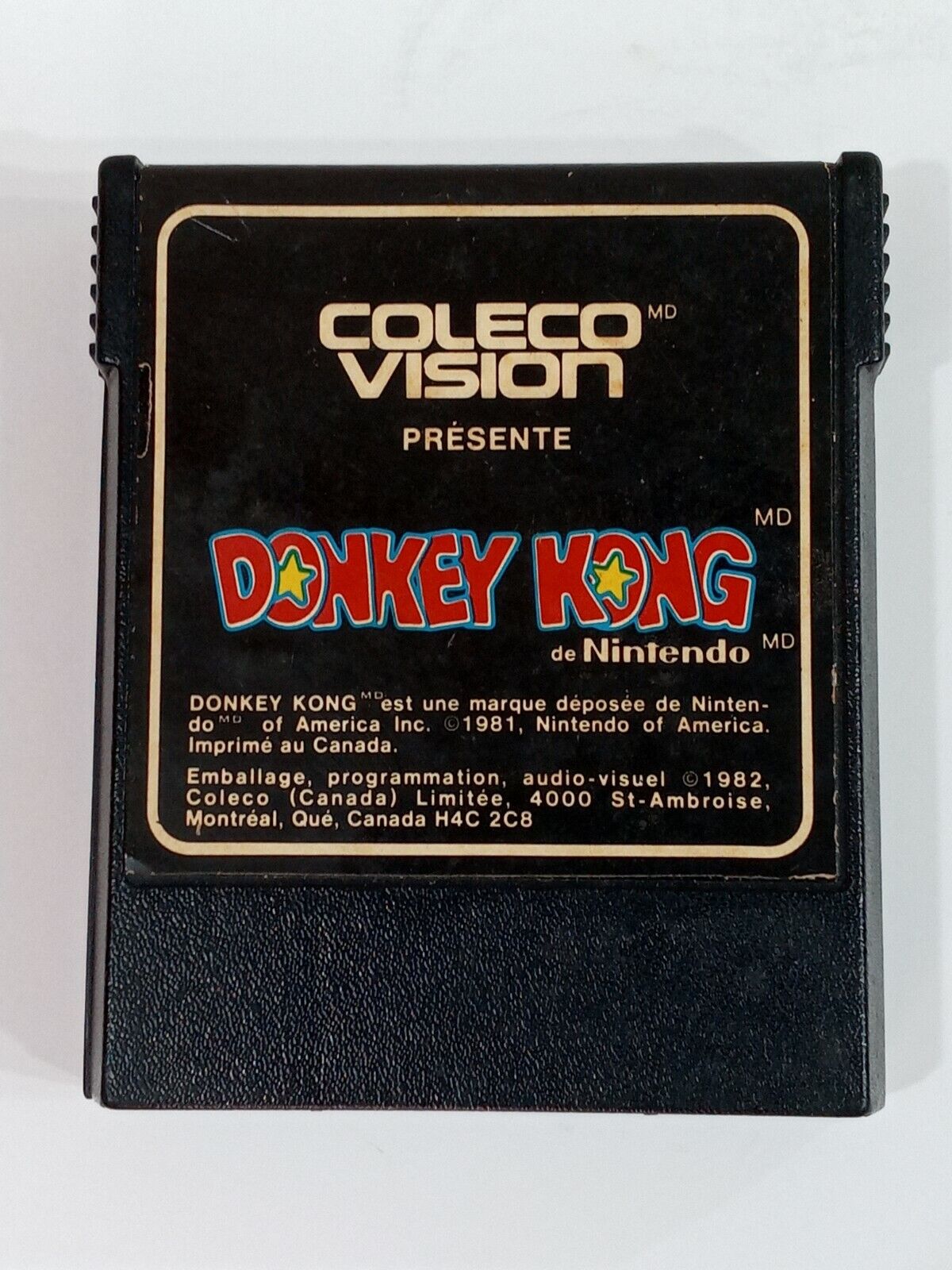
Donkey Kong

Although its direct competition was the Atari 5200, which was always in the lead, it had an expansion module to run games from its competitor's predecessor, the Atari 2600. ColecoVision was so powerful that Sega approached it to release games for its console. When it refused, it launched the SG-1000. Its configuration was identical to that of Sega's SG-1000, with the exception of the video processor, and identical to the MSX PC, with the exception of the AY-3-8910 sound chip, which was similar to the 76489 in the Coleco console . Because of this, games were easily converted between the three systems. The console's first game was Donkey Kong, which was also the first home version of the game. This happened because of a partnership with Nintendo, almost losing this exclusivity to the Atari 2600. This is what made the console sell 500 thousand copies by Christmas of 1982, four months after its launch.

ColecoVision Games

Several games were successful on the console, such as arcade ports made by Sega, Exidy, Konami and others, such as Donkey Kong, Donkey Kong Jr., Lady Bug, Burger Time, Bump 'n' Jump, Spy Hunter, Galaxian, Frogger, Centipede, Choplifter, Roc'n Rope, Congo Bongo, Mister Do! (these brought by Coleco), Zaxxon, Popeye, Pac-Man, Q*Bert, Gyruss, Mr. Do's Castle, Super Cobra, Boulderdash, Jungle Hunt, Tutankham, and ports from other consoles and PCs such as SG-1000, MSX and C64, such as Smurf, Decathlon (also brought by Coleco), Pitfall I and II, River Raid, HERO, Antarctic Adventure, Keystone Kapers, Miner 2049er, Frantic Freddy, Pitstop, Jumpman Junior, Oil's Well, Sammy Lightfoot, Zenji, Montezuma's Revenge, among others. Additionally, the console received original and first-released games for it, all by Coleco, such as WarGames, Cabbage Patch Kids, Dr. Seuss's Fix-Up the Mix-Up Puzzler, The Dukes of Hazzard, Fortune Builder, Ken Uston Blackjack/ Poker and others.

It also had exclusive titles for the console, such as Illusions, 2010: The Graphic Action Game, Tarzan, Rock Super Action Boxing, Super Action Baseball and Football, among others. Its ports were the closest to the most powerful arcades compared to ports made for competitors such as the Atari 2600 and Intellivision. The console was discontinued in 1985.

Thursday, April 13, 2023

The History of Atari 7800 Emulators

V7800 (1999)

V7800

The Virtual 7800 was created in 1999 by renowned Atari console emulator creator Dan Boris, creator of the VCS emulators for the Atari 2600 and VSS for the Atari 5200. The intention of creating the emulator was to be part of the MESS multisystem emulator. As the latter had not yet had its own version in 1999, Dan decided to first release the V7800 as a standalone emulator in May 1999 for MS-DOS. The emulator was built with Ron Fries' TIA sound emulator, Shawn Hargreaves' Allegro multimedia library, and Carlos Hasan's Seal sound library. In the second and final release of the emulator in June 1999, he improved the emulation of the same by replacing the processor emulator for Neil Bradley's Multi-6502. This version has some improvements, such as a debugger, pause button and bugs. Despite this, the emulator was a bit slow.

V7800 (Galaga)

The V7800 operated on a command line basis, ie, MS-DOS commands, without a GUI/front-end to facilitate access. Given this, around 1999, Todd Lawrence created the Regal Beagle 2000, which created an interface for the V7800 of the Atari 7800, in a Windows version. Other front-ends were created for the emulator, such as Psyman's Offend in November 2000, which later wanted to support other consoles, and the Brazilian Atari 7800 Frontend, created by André in August 2001. After June 1999, the emulator migrated to MESS, being released in 1999, most likely in the November version. In 2003, MESS created a port of its multi-emulator for Dreamcast, and in the same year Ian Micheal removed from MESS only the Atari 7800 emulation for Dreamcast and released the DC7800 fork, also known as a7800new. In August 2004, XPort made a port of MESS's Atari 7800 emulator for Xbox.

Emu7800 (2003)

Emu7800 (Interface)

Emu7800 was created by Mike Muprhy in 2003 and runs with support for Microsoft's .NET Framework platform. It works well from Windows XP SP3 (service pack) onwards. In addition to running Atari 7800 games, it also runs games from the 2600 console. Most of the titles that run on the ProSystem 7800 and VCS 2600 emulators run on the V7800. The authors of the Stella, Z26 and V7800 emulators, consecutively Bradford W. Mott, John Saeger and Dan Boris helped him with the project, as did Ron Fries with his sound library, TIA Sound. Later he also had help from the creator of the ProSystem Emulator, Greg Stanton.

Emu7800 (Desert Falcon)

Its first version was released in October 2003 for Windows directly on SourceForge. The emulator has had 20 updates in total. Among them, we highlight the January 2004 version that replaces the Managed DirectX API with the SDL library, the January 2011 version that brings support for 64-bit systems when running on those systems, and the January 2012 version that supports Windows Phone. Its latest version is dated March 2012.

ProSystem Emulator (2005)

ProSystem Emulator

ProSystem Emulator (derived from the original name of the console it emulates) was the last and best-known Atari 7800 emulator. It was created in 2005 by Greg Stanton. Its first release was in February 2005 for Windows, as version 0.1. The first version already made the documentation (and not the source code) of its emulator available. To use the emulator, it was recommended to have at least a Pentium 400MhZ, with 128MB of RAM, an 8MB graphics card, and sound and video with support for DirectX 6. The second version of the emulator, 1.1, came out in January 2007, with color palette corrections and joystick support made by Brian Berlin, who began updating the emulator from then on. From this version forward, he also began releasing its source code. In the next version, 1.2, from April 2007, Brian worked mainly on the menus and command lines.

In December 2008, it was updated by Leonis. He was looking for a good Atari 7800 emulation, and the ProSystem was the best. From then on, he decided to modify it, because he wanted to capture screenshots of his games. At the time, Greg did not answer him about this modification and Brian said he did not know how, because he could not change the source code. So Leonis ended up finding out by himself. Because version 1.2 of the emulator had been modified, it initially came as 1.2 LE, by Leonis, and later changed to 1.3. Days after this version, it was updated to 1.3a.

ProSystem Emulator (Galaga)

Starting in March 2008, the emulator began to be updated by Gdement with version 1.3b, followed by versions 1.3c, 1.3d and 1.3e respectively released in March, April and June 2008. Among several updates, version 1.3e fixed bugs for several games. Greg's website posted all of these versions, both his own and Brian's, and the first one by Leonis. The other versions of the emulator, from version 1.3a onward, are only posted on the AtariAge forum. In March 2015, Greg created an account and page on GitHub and posted Leonis' December 2008 version 1.3. It seemed that Greg would update the emulator again, but that never happened.

Regarding ports, there were versions for PSP in 2007 and GP2X Wiz in 2009, both by Ludovic Jacomme, known as Zx-81, called PSP7800 and Wiz7800, for Nintendo Wii in 2010, by raz0red or razored, called Wii7800, which had elements of versions by Leonis, Gdement and Ludovic, for Nintendo DS in 2011, by Alekmaul, called A7800DS (also with ports for Windows, MacOS programmer, Dan Boris, wrote on his website that ProSystem had excellent Atari 7800 emulation accuracy.

Monday, April 10, 2023

The History of the Atari 7800

Atari 7800 Console and Hardware

The Atari 7800 was released in 1986 by Atari and produced by General Computer Corporation. The project began in 1983 as the Atari 3600 with the aim of making more realistic ports of arcade games, such as the ColecoVision, but the following year the company was sold and the project was shelved. Due to payment problems to GCC, the hardware was only released two years later. The console came with a SALLY CPU, a customized version of the 6502c, with 1.79 MHz of power, a custom PPU video chip, called MARIA, with 256 colors and 25 simultaneously, a TIA sound chip used in the 2600 also with 2 channels and 4kb of RAM. The console came with less memory and sound than its predecessor, which had 16kb of RAM and 4-channel PSG sound. The console was designed to compete in 1984 with the NES (which won in terms of video chip and RAM) and the SG-1000 (which won in terms of video, colors and RAM), but it did not count on the appearance of the Master System in 1985, which beat the 7800 in everything except the video chip, which was of a lower class, the so-called VDPs. But despite having better hardware than its biggest competitor, the NES, it did not produce graphically better games than it.

Pole Position

Another problem arose with the delay in the release, the production of games ported from original arcades from 1980-83, which were already out of date in 1986. Despite this, they were released, with Pole Position II coming with the device. In addition, there was the NES problem, which brought in companies such as Activision, Capcom, Taito and Namco to produce games exclusively for the device. Luckily, Atari found a loophole, managing to port games from these companies released in arcades that were not theirs, also giving the rights to their games to the manufacturer of these arcades, and thus some games could be ported to the Atari console. Among them, we had Mario Bros., Double Dragon, Commando, Rampage, Xenophobe, Ikari Warriors and Kung-Fu Master. The console also had many improvements, from a joypad based on the SG-1000, to the possibility of running Atari 2600 games, which its predecessor failed to support. It also required digital signatures for its games, avoiding the excess of bad and repeated games that resulted in the 1983 crash with its 2600 model.

Atari 7800 Games

Among its successful games, we had ports of its predecessors, such as Xevious, Centipede, Choplifter, Galaga, Donkey Kong Jr., Fatal Run, Ms Pac Man, Dig Dug and many others. Despite this, it had fewer games ported from its predecessors than the 5200, with practically half of the games released as exclusive to an Atari console, which was the case of Pole Position II, One On One, Impossible Mission, Super Skateboardin', Alien Brigade, Tower Toppler, Karateka, Scrapyard Dog, Basketbrawl, Mean 18, Super Huey UH-IX, among others, totaling 26 games out of a total of 59 released for the device. The console also had unlicensed arcade ports released between 2005 and 2022, such as Klax, Beef Drop, Pac-Man, Space Invaders and others, most of them from the AtariAge website. Even with the reported problems, along with poor marketing, some slow ported games and a smaller number of games released in total compared to its predecessor, it sold 10 million units in six years, having released 1 million of them in the first two years, similar to the Atari 5200. The console was discontinued in 1992, along with the 2600 and Atari's 8-bit computers.

Friday, April 7, 2023

The History of Atari 5200 Emulators - Part 2

JUM52 (2000)

JUM52

The Jum52 project was created in 1999 by James Higgs to emulate Atari 5200 games. The project had help from Dan Boris, creator of the Atari 5200 VSS emulator, Ron Fries and Neil Bradley with their sound and processor emulators, and Richard Bannister for his ports for MacOS and MacOS X respectively in February and March 2001, among others. Its first release occurred in February 2000 for MS-DOS, with a version for Windows in October 2000. The emulator is complete. It has joystick support, has a save state, its own interface, and runs in its default state of 60 frames executed from a Pentium 200MhZ, as was seen at its launch.

JUM52 (Win32/SDL)

In addition to the Macintosh ports, the emulator was ported to BeOS in March 2001 by Caz, as Jum's Atari 5200. Ports to QNX in March 2002, Linux and Ubuntu in February 2010, for the Playstation 2 consoles in June 2002 and PSP in April 2008. In addition to having versions for the portable systems iOS and Windows Phone. The emulator is updated from 2000 to 2004. After that, it has a long hiatus and receives its last update in February 2010, along with the latest versions of PSP, Linux and Ubuntu. The project ends with 90% of the console's games running. After the 2010 update, Bannister still updated the Mac version in March 2018, rebuilding the emulator with the Cooca APIs. The last update for Mac came out in December 2019. In addition to creating Jum52, James also ported Colecovision's ColEm emulator to the PS2, called ColemPS2 in 2002.

Kat5200 (2005)

Kat 5200

The Kat5200 emulator, created in November 2005 by Brian Berlin. Like the Atari800 emulator, it ran not only the Atari 5200, but also Atari's 8-bit computers, the 800, XL and XE, which were supported from the October 2008 version onwards. Kat 5200 was released for Windows and Linux, and is considered the best emulator for the console alongside the Atari800. Kat5200 had help from a variety of people in the 5200 scene, such as Dan Boris, creator of the Virtual Super System, helping with its debugging; the Jum52 emulator, helping with mapping tables; the Atari800, with its very useful emulator and debugger; and the AtariAge website with important posts on the subject, which is the most important website about the Atari franchise. The emulator was updated until June 2009, returning only in February 2017. The emulator was always released for SDL, which could be ported to other systems, and this time it is updated to the SDL2 model. It also begins to bring support for MacOS X. In December 2017, it begins to support more modern OpenGL and becomes part of the RetroArch multi-emulator. Its latest version was released in January 2018. On the same date, it releases a test version for Android, which has no continuity.

Other Emulators

Rainbow and XL-It!

There were other Atari 5200 emulators, such as Rainbow (also ran Atari computers) in 1995, XL-It!, created in March 1996, Pokey in 1996, Xformer Classic in December 1998 (an Atari 8-bit PC emulator, which claimed to also run the Atari 5200), as well as the Altirra emulators (which also emulated Atari computers), Emu7800 (which also runs Atari 7.8k), Atari++ and A8E. There were also emulators for other systems, such as JXD-a2600 for Android (made from the Stella source code, and also ran the Atari 2600) and a5200DS for the Nintendo DS. From 1998 onwards, it was included alongside the Atari 800 in the multi-system emulator, MESS.

Tuesday, April 4, 2023

The History of Atari 5200 Emulators - Part 1

Atari800 (1995)

Atari800

The first emulator for Atari 5200 was created by David Firth in 1995 to mainly emulate the Atari 800 computer. Its first release took place in June 1995 for UNIX (also running on Linux and other systems). In version 0.4.5 of July 1996, it began to support the Atari 800XL, 130XE computers and the 5200 console. In the next version in September 1996, it also began to release the emulator for Amiga and MS-DOS. It operated in two ways, either by command line, or by X-Windows, an interface system that created windows in UNIX systems for running the emulator. David had already created a compiler for the Atari800 in 1985/86, and even a game had been released for it, called Enigmatix, by Page 6, but despite the existence of a modern PC emulator, called PC Xformer, he wanted his own emulator based on its compilation and that would run on a system that was easily portable to others, which was UNIX.

Atari800 (Moon Patrol/Options)

In April 1997, version 0.8.0 was released, where it began using the Pokey Sound emulator by the famous sound emulator creator, Ron Fries, bringing a substantial improvement to the emulator's sound. After this version, there was no update for a long time. Third parties, upon seeing this hiatus, began to update each version of the emulator on their own, thanks to the project being open source. These programmers were Stephen Firth, with the Amiga version, Rich Lawrence, with the X-Windows version, Perry McFarlane with the MS-DOS version. In June 1997, David returned with another version, taking another hiatus without updates, and returning in January 1998 with another version. In this version, he added support for the Atari Falcon thanks to the Czech Petr Stehlik, Joy. From this version forward, the emulator was simultaneously released for UNIX, X-Windows, MS-DOS, Atari Falcon and Amiga. In February 1998, David released his last two versions of the emulator, for a total of 45 releases in all, and ended the project.

Atari800

That same month, Stephen, Rich and Perry, creators of the ports for Amiga, X-Windows and MS-DOS, joined forces with Thomas Richter, Radek Sterba, Robert Golias and Petr Stehlik (the latter leading the project and responsible for the Atari Falcon version) to create the Atari800 Development Team, developing the project from then on. Before it was formed, David Firth was contacted by the group and approved the continuation of his project. In July 1998, it also began to run on Atari ST and Atari TT PCs. Its Windows version was released in November 2001, also known as DirectX. This version also began to support WinCE (Power PC) systems by Vasyl Tsvirkunov and SDL by Jacek Poplawski.

Atari800 (Options/Bruce Lee)

Other ports appeared, such as for BeOS in December 2004, for Dreamcast in April 2006, Java in March 2009, Android in April 2011, Raspberry PI in April 2014 by Andrey Dj and libatari800 in December 2019 by Rob McMullen, in addition to unofficial ports, such as Android, Windows, MacOS, PSP, PS2, Nintendo Wii, GP32, GP2X, GP2X Wiz and others. In March 2009, the Windows-SDL version began to be released, replacing the Windows-DirectX version in March 2013. The emulator was updated until May 2022. A total of 64 versions were released between 1998 and 2023. The emulator was also part of the OpenEmu multi-emulator for MacOS from 2015 onwards. The group currently consists of Petr and Perry, alongside Piotr Fusik and Tomasz Krasuski. Its latest version is released in December 2023.

Virtual Super System (1996)

Virtual Super System

VSS, or Virtual Super System, was released in September 1996 by Dan Boris for MS-DOS, who later created the first emulator for the Atari 7800. One of its main supporters was Ron Fries, creator of the sound emulator used in the program, TIA Sound. At first, VSS supported a few games. Over time, the list of supported titles grew. By April 1998, it supported 85% of them, followed by 90% in February 2002, and 95% in April 2004.

Virtual Super System (Dig Dug)

The VSS runs the following titles almost perfectly: Pac-man, Ms. Pac-man, K-razy Shoot Out, Frogger, Frogger II, Jungle Hunt, Astrochase, Berzerk, Blue Print, Centipede, Defender, Gorf, Gremlins, Kaboom, Missile Command, Pengo, Space Dungeon, Super Breakout and Bounty Bob. The only games that did not run on the emulator were Mr Do's Castle, Decathalon, Pole Position and Real Sports Soccer. The emulator ran on a 486 with 2MB of RAM, but ran without crashing on a 133MhZ processor and a PCI video card. The emulator used the famous Allegro library as the basis for building its system, a library created in 1990 for creating games, similar to the also famous SDL created in 1998.

Regal Beagle 2000

Brazilian Atari 5200 Frontend

The emulator works on a command line basis, ie, MS-DOS style commands, without a GUI/front-end to facilitate access. In view of this, around 1999, Todd Lawrence created the Regal Beagle 2000, which created an interface for the VSS, as well as for the V7800 of the Atari 7800, also created by Dan Boris, in a Windows version. The Brazilian Atari 5200 Frontend was also released in 2001 for the emulator. The emulator was updated between 1996 and 1998, taking a hiatus for a while and returning in 2001, and then taking another three years on hiatus and having its last release in April 2004.

Saturday, April 1, 2023

The History of the Atari 5200


Atari 5200 Console and Hardware

The Atari 5200 was the second second-generation video game console released by Atari, the first being the 2600. It arrived to compete with the Intellivision, which had a superior 16-bit CPU, but months later it was faced with the launch of the ColecoVision, which became its real competitor, as it had one of the best hardware of the time, losing only in CPU and RAM to the 5200. The Atari console configuration had a customized MOS 6502 CPU with 1.79 MHZ, two graphics chips, the ANTIC and the GTIA, which worked together, the GTIA being the evolution of the TIA video chip created for the 2600. Despite supporting up to 256 colors, unlike all its second-generation and even third- generation competitors, it could only have 16 simultaneously, tying with the Intellivision and Odyssey 2. It also had 16kb of RAM, competing in this regard only with the SG-1000/Master System and third generation NES. And finally, it had 4-channel PSG sound with the Pokey chip, used in several Atari arcades. This was a big complaint about its predecessor, the audio quality, here very well worked.

Pac-Man

The console was launched with Super Breakout, a sequel to the famous Atari 2600 Breakout. Other successful games from its predecessor were launched and even continued on the console, such as Defender, Frogger, Galaxian, HERO, James Bond 007, Keystone Kapers, Mario Bros., Megamania, Missile Command, Ms. Pac-Man, Pac-Man, Pengo, Pitfall!, Pole Position, Popeye, Q*bert, River Raid, Robotron: 2084, Space Invaders, Star Trek, Star Wars, Zaxxon, Wizard of Wor, Qix, Berzerk, Choplifter, Mr Do's Castle, Miner 2049er, Centipede, Beam Rider, Vanguard, Congo Bongo, among others. Although most of the games were ports from the Atari 2600, 15 of them were new to the console, including Countermeasure, Meteorites, Zone Ranger, K-Razy Shoot-Out, Qix, Rescue on Fractalus!, Robotron: 2084, Space Dungeon, Return of The Jedi: Death Star Battle, Zenji, Astro Chase, Ballblazer, Bounty Bob Strikes Back!, Choplifter and The Dreadnaught Factor. Only Countermeasure was exclusive to the console. The demand for games was basically the same as its predecessor, primarily shmup (spaceship) games, platformers, racing games and sports games.

Atari 5200 Games

Despite the console having great hardware and competing with all second-generation consoles, in addition to the great titles released, it only remained on the market for two years, being the console that was produced the shortest amount of time. Market analysts say that the lack of backward compatibility with games from the Atari 2600, which at the time was still very famous, combined with few releases for the 5200 because Atari focused much more on releases for its predecessor, harmed its sales and automatically led to its closure. The console sold just over 60 games compared to 530 for its predecessor. The Atari 5200 was discontinued in 1984 in favor of its third-generation successor, the Atari 7800. Its total sales were a little over 1 million copies, compared to its predecessor's almost 30 million copies.

Featured Posts

Blog Index

The History of Arcades Arcade Emulators - Williams Digital Arcade, Sparcade!, Emu / Retrocade Arcade Emulators - MAME Arcade Emulators - Sys...

Popular Posts

Total Pageviews