Friday, April 28, 2023

The History of Intellivison Emulators - Part 1

Intellivision For PC (1997)

Intellivision For PC

The first Intellivision emulator, the Intellivision For PC (INTVPC) or Intellipack, as it was later known, has a curious history. It was created by Carl Muller Jr. in 1997, a student from Michigan, USA, who was trying to figure out how the console worked. In the same year, the Intellivision Productions, Inc. group was formed by former Mattel programmers (the company that created the console), Keith Robinson and Stephen Roney, who acquired the rights to the console and its games. Keith and Stephen were already part of the website The Blue Sky Rangers, created in June 1995 by former Mattel programmers to tell a little about the history of the console and Intellivision games. The name was informally given to the group by the American magazine TV Guide in 1982, when they were producing games for the Intellivision.

Intellivision For PC (Volume 2)

At that time, Keith and Stephen contacted Carl, who began working on the team. Stephen Roney also developed the Macintosh version of the emulator, most likely as a port of Carl's emulator. At that time, Intellipack was born, known at the time as Intellivision for PC & Mac, a two-volume collection of Intellivision games, created in August and released for free download in October and November 1997, respectively for Windows 95 (running on MS -DOS), Macintosh and Sharp 68k, on the company's official website. We can say that this was the first emulator created indirectly by the console's creators themselves.

Intellivision For PC (Emulator)

Carl Muller was the general programmer, along with Williams Moeller and Scott Nudds, who took care of the binaries and technical support for the project, among other partners. The Windows version only worked on Windows 95 and DOS, and did not support Windows 3.1. Each collection included three games from the console. Curiosity. Volume 2 of the collection included the game Dep Pockets Super Pro Billiards, unreleased until then. It was created in 1990, but never released by INTV Corporation (Mattel's successor from 1984 onwards in control of the Intellivision). This collection was very interactive, with its own menu to stop the games, and a detailed explanation of the objective of the game, how to play, including explanatory graphics and the settings for the controller keys.

Intellivision Lives! (Front and Back Cover)

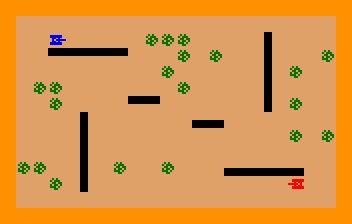
Intellivision Lives! (Interface/Battle Tanks)

Intellivision Lives! (Menu/Info)

In 1998, Carl Muller created a new emulator, now for Windows, for the PC release of Intellivision Lives! in October 1998 with 50 games. Despite this, it came with an updated version of INTVPC for MS-DOS on the CD (repeating the same with Intellivision Rocks). Intellivision Lives! was re-released in 2002. Other collections were released in sequence, such as Intellivision Rocks in November 2001, with 30 games, Intellivision Greatest Hits: 20th Anniversary Edition in January 2003, with 25 games, and Intellivision Las Vegas Lounge Trio in July 2007, with 80 games. 

Intellivision Rocks (Front and Back Cover)

Intellivision Rocks (Menu/Info/Pitfall)

Some of these collections were ported to other platforms, such as Intellivision Lives! in 2003 for Xbox and PS2, 2004 for GameCube, 2008 for Xbox 360, 2010 for Nintendo DS, and 2013 for PS3, as well as Windows Phone and iOS. There were also exclusive releases, such as Intellivision Classic Games in 1999 for PS1, with its own, one-time emulator created by Mike Livesay, creator of Action Pack, the first Atari 2600 emulator.
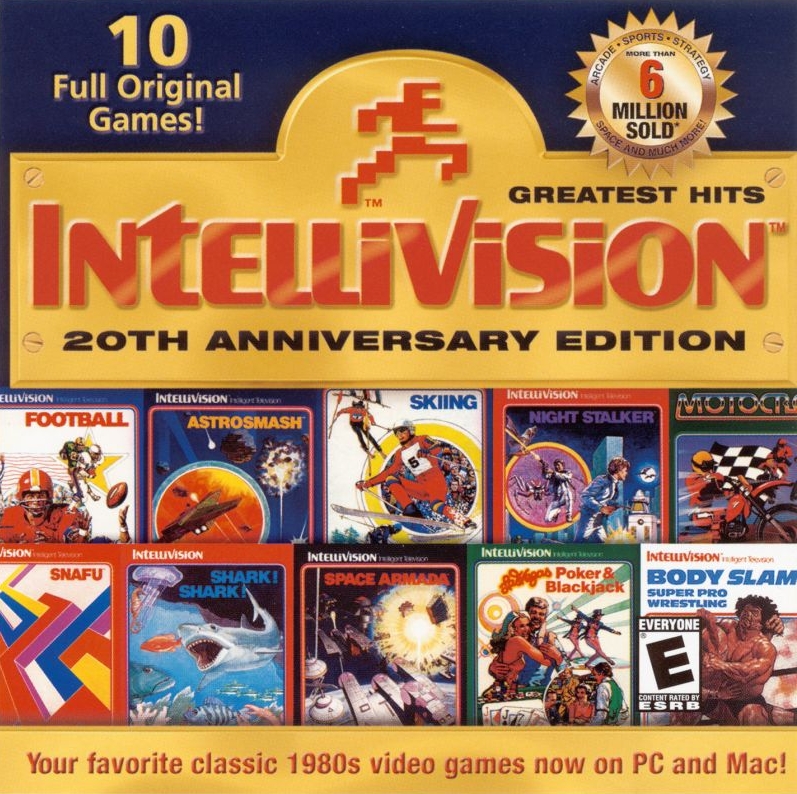
Intellivision Greatest Hits: 20th Anniversary Edition (Front and Back Cover)

Intellivision Greatest Hits: 20th Anniversary Edition (Interface)

Intellivision Las Vegas Lounge Trio (Front and Back Cover)

About the Intellivison For PC collection, it received a new name on the website in August 2000, being called Intellipack, but without any changes to its files. Around April 2001, they released another volume of the collection for download, Intellipack 3, with a completely new look, with four games, a new emulator, its own front-end and released for Windows. In 2003, they re-released the classic volumes 1 and 2 of their collection for Windows, using the same emulator and front-end used in volume 3.

Intellipack 1

Intellipack 2

Intellipack 3

The intention of the Intellivison For PC/Intellipack collection was always to promote the CD-ROMs released by Blue Sky, such as the debut in 1997 with volumes 1 and 2 to promote Intellivision Lives that would be released the following year, in 2001, with volume 3 to promote Intellivision Rocks that would be released the same year, and in 2003, with the re-release of volumes 1 and 2 for Windows to promote Intellivision Greatest Hits, already released that year. In 2019, the company adopted the name Blue Sky Rangers. Interestingly, in 2000, Carl Muller, using Intellipacks, created the first port of an Intellivision emulator for the Gameboy Color, called I4GBC. I believe it was also the first emulator to run on this simple portable device. Carl worked on this project until 2003.

JZINTV (1999)

JZINTV

JZINTV, or simply Joseph Zbiciak Intellivision, was a project that began in 1998, and was first released in August 1999 for Windows by the emulator's namesake. The project was created from scratch, but was inspired by Carl Mueller's emulator, Intellivision For PC. The project was the second to emulate the console, and the first unofficial one. In September 1999, it was released for Linux, Windows, UNIX (Linux) and MacOS. In the September 2000 version, support for Intellivoice was added, a cartridge that ran its own games guided by the player's voice, with an emulator of the peripheral created by Joe. JZINTV is an emulator that runs through MS-DOS-style command lines. This was the case for many years, until in June 2006, Rich Nagel created the first front-end for the emulator, the jzIntv Launcher, for the Windows version of the emulator. Rich is followed in September 2006 by Arnauld Chevallier (also creator of the Intellivision emulator Kinty) who creates the jzIntvGUI front-end. In June 2020, Jenergy creates the Jzintv ImGui front-end.

Jzintv ImGui

JZINTV had several release hiatuses, including the years 2005, 2007 to 2011, 2013 to 2015, and 2019. Its latest version was released in July 2020, when it released all versions in SDL format. We do not know from which year it started supporting the ECS peripheral, but we believe it was from 2006 onwards. ECS was an add-on that transformed the console into a PC, with its own games for it, with support for keyboard and musical keyboard. The following emulators helped directly and indirectly in the project: Frank Palazzolo from the MESS project, John Dullea from the IntvWin project, Carl Mueller from the Intellipacks project, Joe Fisher from the Nostalgia project, among many others. The emulator had versions for DOS, Solaris, MacOS X, and others. It has also been ported to several platforms, such as the Nintendo Wii as JZINTWII in 2010, the PSP handhelds as PSPInt in 2005, GamePark GP2X as GP2X-INT in 2007 and IN2X in the 2000s, and GamePark Caanoo as Caanoo-Int in 2011, and the Android system as jzINTV4DROID in 2012 (created by Jenergy). JZINTV is considered one of the most compatible Intellivision emulators.

A Collection of Classic Games From The Intellivision (A Collection of Intellivision Classic Games) (1999)
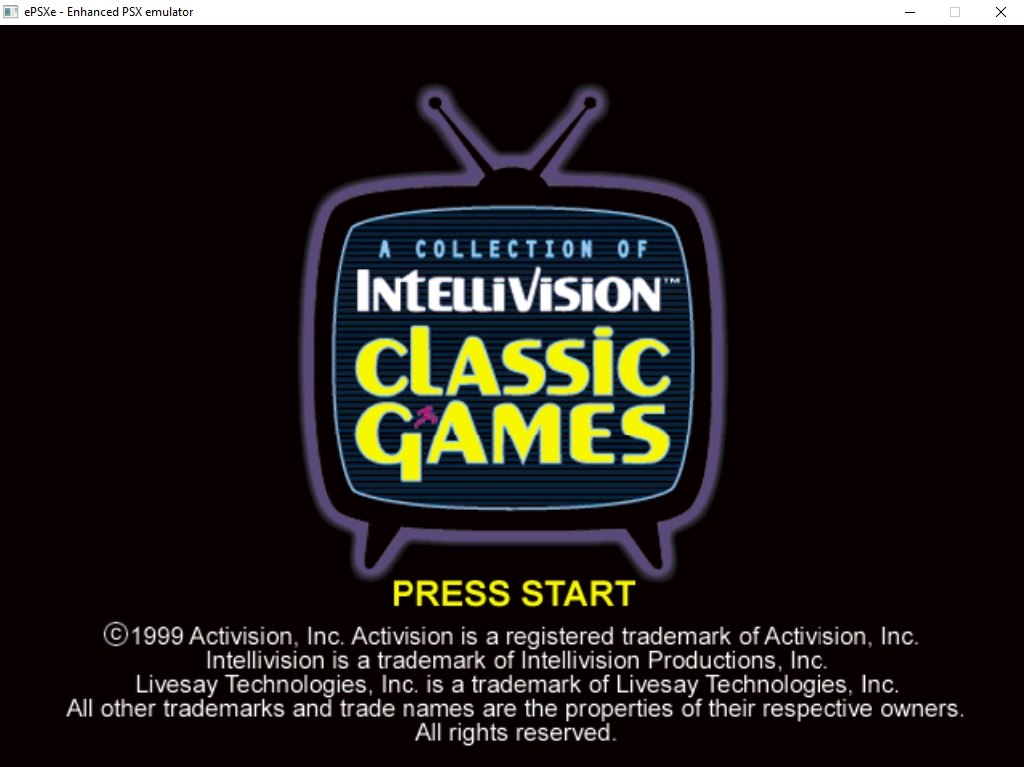
A Collection of Classic Games From The Intellivision

It was an Activision compilation released for PSX in September 1999, where an emulator was developed by LTI Gray Matter, headed by Michael Livesay. Mike had become known for having created the first Atari 2600 emulator also for Activision. Unlike the Atari emulator that was released in several compilations, the Intellivision emulator was only released once. The compilation ran thirty games, among them classics such as Boxing, Pinball, Shark! Shark!, Space Armada, and others.

A Collection of Classic Games From The Intellivision (Interface/Boxing)

Mike also worked in the game creation industry with his company (which was created in 1992), for PS1, 2 and 3 until 2008, and has been in the industry since 1980 creating games, since 1982 with Livesay Computer Games and 1986 with Livesay Technologies Incorporated, all his companies.

IntvDOS / IntvWin (2000)

IntvDOS

IntvDOS was created by John Dullea in 1999, using the base of the PC Atari Emulator developed by him in 1996. The emulator was only released the following year, in December 2000 in MS-DOS. In its first version, it already supported the ECS add-on, with support for keyboard and musical keyboard, and Intellivoice. Its interface is identical to the PCAE emulator, also by John Dullea, with a control configuration menu, such as mouse, keyboard, joystick and controls such as GrIP, SideWinder and Intv2PC support, which allowed the Intellivision controller to be connected to the PC. Preference menu, with screen size, change of for, frames per second, among others. Sound menu, with choice of sound frame rate. In addition to on/off switching for the debugger and sound. Like all Intellivision emulators, it also requires the system bios.

IntvWIN

IntvWIN (Pinball)

The Windows version was only released in March 2002, under the name IntvWin, and was also based on John's PCAE emulator. Its interface had options for screen resolution, fullscreen, pause, reset, screenshot, control configuration via keyboard, mouse, joypad and INTV2pc, as well as changing the interface color and font, debugger mode and information menu for each ROM. Unlike its predecessor, the emulator only ran games in .BIN format.

IntvWIN (Menus)

In May 2002, the latest version of the emulator, 1.1, was released. Intv had help from, among others, The Blue Sky Rangers from Intellipacks/Intellivision Lives!. For a good execution of the emulator, a 486 with 32 MB of RAM, DirectX and a sound card with DirectSound support was recommended.

Tuesday, April 25, 2023

The History of Intellivision

Intellivision Console and Hardware 

The Intellivision (a combination of television and smart phone) was released in the US by Mattel in 1979. Mattel Electronics was a classic toy manufacturing company. It decided to enter the home gaming market in 1977, the year its main rival was released. The console was released with a processor of less than 1 MHz, losing out to all its second-generation competitors if it weren't for one detail. It was a 16-bit processor, while all other competitors worked with 8 bits. It was the first console to use this innovation. Its processor was from General Instrument, the CP1610, accompanied by 1kB RAM, considerable for the time, AY-3-8900 video chip with 16 colors, 8-bit video memory and GI AY-3-8914 sound chip with 3 audio channels. The console had some milestones, such as being the first to use tiles, which was the basis for many RPG games for consoles such as SNES and others. It was the first to distribute games over the network, also the first to allow games via voice command and the first to bring a 3D perspective. Another milestone was remaining active even during the great electronic games crisis of 1984 in the USA. 

Intellivision Games

Like its competitors, its games were third-party ports made for arcades, consoles and computers of the time. Among them were Burgertime, Bump 'n Jump, Major League Baseball, River Raid, Nightstalker, Pitfall, Atlantis, Pac-Man, Demon Attack, Astrosmash, Donkey Kong, Beamrider, Locomotion, Treasure of Tarmin, Spiker, Beamrider, Advanced Dungeons & Dragons I and II, Night Stalker, Qbert, Dig Dug, Space Battle, Skiing, Pinball, Thundercastle, Horse Racing, Chess, Atlantis, Diner, Thin Ice, among others. As for games that were new to the console, we had Boxing (a different version from the Atari 2600), Intellivision World Series Major League Baseball, Shark! Shark!, Motocross, Sea Battle, Sharp Shot, Buzz Bombers, Space Hawk, Mattel's Triple Action, Happy Trails, Activision's Worm Whomper, Beauty and the Beast, Dracula, Ice Trek, Microsurgeon, Swords & Serpents, Tropical Trouble, White Water! and Truckin' from Imagic and other companies such as Chip Shot: Super Pro Golf and Stadium Mud Buggies.

Intellivision II

In 1983, Mattel launched the Intellivision 2, the second model of its console, which was cheaper and more compact. Perhaps because Mattel was well established in Brazil, this was the only country besides the USA and Canada that saw the launch of this model of the console. The Intellivision was discontinued in 1990.

Saturday, April 22, 2023

The History of ColecoVision Emulators - Part 2

Koleko (2000)

Koleko

Koleko was created in 2000 by Saverio Russo, also known as SiRioKD, and was released in December 2001 for Windows 9x, NT, 2000 and XP. The emulator works in full screen and has a list of supported games to choose from. Interestingly, there is no need to download the ROMs, as they are already built into the emulator. There are 50 supported games in total. It is recommended to have a Pentium 2 300MHz with DirectX 7, which at the time was a medium configuration.

Koleko

Koleko (Bolder Dash)

The project was supported by Marat Fayzullin, with his TMS9918 video chip core, also used in the MSX and Master System, Richard Mitton with his Z80 emulator, the Raze-x86, and Omar Cornut, for codes and technical support. Its latest version was released in October 2002, with twelve versions released in total. In January 2003, a port of the emulator for Xbox was released under the name Koleko-X.

Mugrat (2003)

Mugrat

Mugrat was the last ColecoVision emulator to arrive. It was the first emulator by Richard Bannister, known for porting several emulators to MacOS. It was created in August 2003 for MacOS X. He updated it until 2008, returning in 2018 when he rebuilt it using the Cocoa API for better performance between software and hardware. This API is used on Apple computers with Macintosh operating systems. The emulator has never been ported to any other operating system. Its latest version was made in December 2022. The emulator also runs on the iOS system.

Other Emulators

There were other ColecoVision emulators, such as CULT (MS-DOS) and Mission (MSX-DOS). There was also a project in 1998 called Omega Core, which initially intended to emulate ColecoVision. Its intention was to develop a multisystem emulator by gradually adding other emulators to it and allowing third parties to improve it through DirectX and OpenGL plug-ins (which would be its initial development). Something quite advanced for its time. The project did not go ahead and ended in November 1998.

The console also ran on other emulators, such as the multi-system MESS in 1998, Darcnes for NES and Meka and BRSMS for Sega 8 Bits in 1999, Freeze SMS for Sega and Nintendo 8 Bits in 2002, BlueMSX for Sega and Nintendo 8 Bits (for MSX) in 2003, CrabEmu for Sega and Nintendo 8 Bits (for Linux) in 2005, Phoenix for 3DO and Jaguar in 2006, DSP Emulator for multi-system and Cogwheel for Sega 8 Bits in 2008, Final Burn for Arcade in 2014, OpenEmu for multi-system for MacOS in 2015 and MAME for Arcade in 2019.

It also had its own versions for consoles and portable devices, such as PocketColeco for Pocket PC in 2002, ColecoTech for GBA in 2003, CoG for GBA in 2004, Colecods for Nintendo DS in 2005, Cologne for GBA in 2006, S8DS from Sega 8 Bits for Nintendo DS in 2009 and MSX.emu for Android in 2011.

Wednesday, April 19, 2023

The History of ColecoVision Emulators - Part 1

ColEm (1996)

ColEm (MS-DOS)

ColEm was the first ColecoVision emulator released in February 1996 by Marat Fayzullin. Marat was developing an MSX emulator when he realized that the system was very similar to the second generation game console, and developed it. It was one of the few emulators that made its source code available for free, which helped other creators to develop video game emulators. Initially the emulator ran in DOS mode, and was later ported to other systems.

ColEm (Windows)

ColEm (Antarctic Adventure)

Among them, still in 1996, MacOS by John Stiles, Windows by Neal Danner (creator of The Virtual ColecoVision), Xfree-86-OS/2 by Krister Bergman, Unix by Joshua Thompson, and another port for MS-DOS by Marcel de Kogel, creator of ADAMem. In 1997 came the ports for OS/2 (IBM system) by Darrell Spice Jr. and the online shareware version on the Kagi website, in 1998 for Acorn by David McEwen, PC98 by Tensai and another port for MS-DOS by Firebug and in 1999 for Amiga by AmiDog. The first version for Windows shared on the emulator website appeared in August 2007, and it came together with the version for MS-DOS. This version was ported by Marat himself.

ColEm 5.6

ColEm 5.6 (Bump 'N' Jump)

Over the years, its biggest updates have been ports of its versions by it or by third parties on the emulator's page, such as for Solaris, Linux, SunOS, FreeBSD, HP-UX, Symbian, Unix, OpenPandora, PC98, PalmOS5, consoles such as Dreamcast, Nintendo Wii, portable systems such as PSP, PS Vita, GP32, GP2X, GP2X-F100, GP2X Wiz, GP2X Caanoo, portable and smartphone operating systems such as Dingux from Dingoo, Android, Pandora, UIQ3 from Sonic Ericsson and Motorola, Maemo from Nokia, on Pocket PC systems (similar to smartphones), among other systems. There are two versions of ColEm on the Play Store, one free and one paid. The paid version adds other functions to it. As of June 2020, ColEm includes the function of emulating the Coleco Adam computer, successor to the ColecoVision. Its latest version for Windows came out on March 3, 2021, and for Android in August 2024.

ADAMem (1996)

ADAMem

ADAMem, as its suggested name, is a fusion of Marat Fayzullin's ColecoVision ColEm emulator with the Adam computer emulation from the same company that produced the console. The emulator was developed by the Dutchman Marcel de Kogel. The project began in 1996, with the emulator released in October, and a second version in November, both in DOS mode. In February 1999, more than two years without updating it, he rewrote it, replacing Marat's Z80 (processor) emulation with his own processor emulator, called Z80Em. This was the last version of ADAMem, released in DOS, Linux and Unix systems. This version was ported by David McEwen to the Acorn system. In March 1999, the emulator gained a front-end to run on Windows 95 and NT, called ADAMEmMam. In October 2003, it gained a version for Xbox ported by XPort, called AdamX.

The Virtual ColecoVision / VColeco (1997)

The Virtual ColecoVision

The first ColecoVision emulation project to be created was The Virtual ColecoVision. Development of the emulator began in October 1994 by Neal Danner and continued until December 1995. In February 1996, Marat Fayzullin's open-source ColecoVision emulator ColEm was released. By this time, Neal had already spent over 400 hours working on his emulator. ColEm was important to Neal, and led him to create a port of the emulator for Windows in February 1996, called ColEm for Win32, and known as ColEmWin, because of the files bearing that name. The port had a single version. After the release of Marat's emulator and its port, he worked another 200 hours on his project, finally releasing his own emulator in July 1997, called ColEm97, in honor of Marat who provided some of her source code for its creation. Later the emulator was called ColEmWin97, but became known as ColEmWin, as it kept the same name as the files it kept in Marat's port.

Virtual ColecoVision (Options)

After that, another version was released, and four versions were released in October. Of these four, the second version added ColecoCheat, which allowed cheating in the game, as well as save states and full-screen mode, followed by other updates. In the third version, the emulator changed its name to The Virtual ColecoVision, known as VColeco and also as VColecoWin. The Win nomenclature at the end of the emulator's name was common at the time to differentiate between MS-DOS and Windows versions. This change occurred, most likely because the emulator was confused with Marat's Windows version, no longer maintained by Neal, and which was also initially known as ColEmWin. And the fourth version, which was the last version of the emulator, came with the game Cosmo Fighter 2, ripped by ADAMem's creator, Marcel de Kogel. The emulator had six versions in all.

Virtual ColecoVision (Cosmo Fighter 2)

One of the emulator's interesting features is that it emulated the Z80 processor, which was created by Neal, unlike most emulators that used Marat Fayzullin's Z80 emulator, which was already well-known in the field. The sound emulation was also done by Neal. In addition to Marat, Marcel de Kogel from ADAMem also helped with the project. The recommendation for the emulator to work properly was a Pentium 100MhZ, with DirectX, 16MB of RAM and a PCI graphics card. A good computer for 1997. With the end of the emulator in October 1997, in the same month Neal created a port of it for Java, known as The Virtual ColecoVision for Java, or simply VColecoJava. It had updates until October 1998.

Featured Posts

Blog Index

The History of Arcades Arcade Emulators - Williams Digital Arcade, Sparcade!, Emu / Retrocade Arcade Emulators - MAME Arcade Emulators - Sys...

Popular Posts

Total Pageviews