Wednesday, August 2, 2023

The History of Master System / SG-1000 Emulators - Part 2

Meka (1999)

Meka

Meka was an emulator for Master System, Game Gear, SG-1000 and SC-3000, developed in 1998 for MS-DOS by the Meka Team, composed of the Frenchman Omar Cornut, Zoop, who emulates the machine, and applies the graphical interface and Hiromitsu Shioya, who works on the Master's sound, emulating the YM2413 chip. Marat Fayzullin contributed to the project, with his Z80 processor, and Omar made some improvements, and other contributors, such as Mitsutaka Okazi, Maxim Gready and Ulrich Cordes.

Meka (Interface)

The emulator had 42 private test versions, the first 31 of which were called ZSms. Changing its name to Meka from the 32nd version onwards, the emulator's documentation also began to be developed. The first publicly released version of the emulator was beta version 0.10 in March 1999, followed by the first official version in April 1999, 0.11, the first to include sound in the emulator. At the time, it competed with Massage, which had recently become free, and Marat's MasterGear, which charged for the use of its emulator. In May 1999, it began to emulate ColecoVision, and in September 1999, Othello Multi Vision, a clone of the SG-1000. In December 1999, it began to support the FM sound of the Japanese Master System.

Meka 0.13

In May 2000, it began supporting the Sega Mark III, and in December 2000, the SF-7000, an extension for the SC-3000. In September 2001, it began supporting several languages, starting with German, Spanish, Portuguese, Italian, German and Dutch. In September 2002, it finally launched the Windows version, known as Mekaw. Over time, compatibility, more tools and improvements in emulation and sound, made Meka the pioneer in Master System games. Another of its differentials was the ease of using tools to program and better understand the supported systems. In my opinion, in practice this is already the release of the emulator's source code, which was officially released in version 0.70 in April 2005. This certainly helped its competitors to work better on Master System emulation, and the other Sega consoles supported by the emulator.

Meka 0.13 (Interface/High School Kimengumi)

In June 2003, the Unix port was released, supporting GNU/Linux and NetBSD systems under the name Mekanix, a fusion of Meka and Unix. In March 2006, it gained a port via XPort for the Xbox console, called MekaX. In May 2007, it released its last version for MS-DOS and its first version for MacOS X, with improvements in July 2012 and stabilization in January 2014. In May 2010, they released version 0.73, from then on releasing only updates with improvements without the need to release a new version. In July 2011, version 0.74 of the emulator and its updates began.

Meka 0.63b (Interface/Dead Angle)

The following month, they announced version 0.80 (the last one to date), which had rewritten the entire sound part of the emulator, fixing several reported sound problems, and giving better sound performance to the Linux versions of the emulator. In October 2011, the releases of version 0.80 began, which was updated until August 2023. From 2019 onwards, the emulator updates were only posted on GitHub. Regarding its front-end, it has undergone some modifications over time. The front-end was released in March 1999 with its aqua-green theme, known as Ocean, and was modified in May 1999, to the classic theme, blue and white checkers, known as Classic. In January 2000, it brought the possibility of changing the front-end theme, with 16 options in total.

Meka (Interfaces/Fantasy Star/Aerial Assault/Pit Fighter)

In March 2000, it came with the OverClocker theme, and in May 2000, it returned with the Classic theme, which it maintained until the end of the MS-DOS releases. The Windows versions have always had the Classic theme as default, as well as starting the front in full key. Starting with the June 2011 version, titled Meka 0.80, the emulator returns with the Ocean theme, as well as starting it in windowed mode. All themes are always available to be modified by the user. In September 2018, a fork of the emulator called RAMeka was created for Windows, which is part of the RetroAchievements project. The emulator provides trophy/achievement unlocking, similar to modern console games. In May 1999, Zoop, outside the Meka project, even worked on the GUI for Charles MacDonald's MekaDrive project to emulate the Sega CD. The project was never released.

MGX (1999)

MGX

MGX began to exist in 1998, being released in May 1999 for MS-DOS by the Japanese BouKiChi. The emulator actually started with the proposal of emulating the GameGear, although it was also released with support for the Master System. Its releases began in earnest in August 1999, with nine releases in total. Also in August, the CPU emulator was changed to Richard Mitton's Raze. In September, it also began to support the SG-1000.

MGX (Lemmings)

In October, it began to run zipped ROMs, which was not common at the time. The emulator had several additions, such as FM sound, joypad, save state and BMP screenshot. MGX worked via the command line, but in October 2000, the ArcadeOS front-end, also for MS-DOS, also began supporting the emulator. The last version of MGX was released in October 1999. BouKiChi was also part of the team that created the DBoy Gameboy Color emulator, a hack of Marat Fayzullin's VGB emulator.

Calypso (1999)

Calypso

Calypso was the shortest-lived Master System emulator. Its first version was released around July 1999 for MS-DOS, under the name Build 005. In addition to being a Game Gear emulator, it was also called a Master System II emulator. Calypso was created by the Spaniard José Manuel Delgado Mendinueta, who had a lot of support from the emulation scene, such as Marat from MasterGear, Sardu from Nesticle, Nyef from DarcNES and James from Massage, who were helpful with the source codes for their emulators, as well as Ricardo from BRSMS, Neil from Retrocade, the Snes9x team from Super Nintendo, among others. Marat Fayzullin, Marcel de Koegel and Neil Bradley also helped with information on their Z80 emulators.

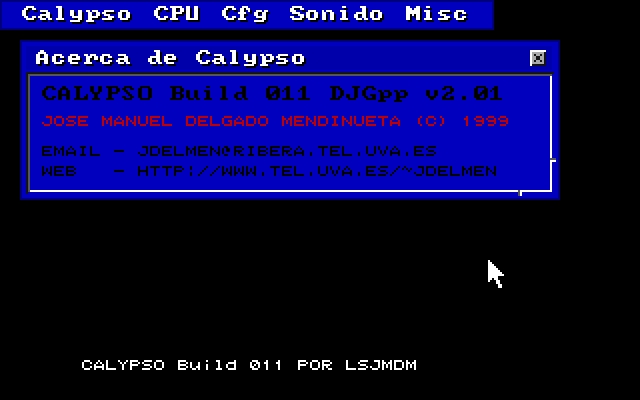
Calypso (Interface)

Initially it used Marat's Z80 emulator, but from the last version onwards it started using Richard Mitton's Z80 emulator. It also used Neill Corlett's M68k emulator. The emulator was always in DOS mode, but had its own GUI. The emulator supported 204 Master System games and 106 Game Gear games. Its last release was in January 2000, totaling seven releases in total. At the time of its last release, it was working on a Windows version, as well as Mega Drive and 32X emulation, among others. Prints of Sonic 3 were released running on Calypso in February 2001, but the project did not go ahead.

Sunday, July 30, 2023

The History of Master System / SG-1000 Emulators - Part 1

Massage (1996)

Massage

Massage was created in July 1996 by Scottish James McKay, with its first version released in October of the same year for MS-DOS, thus being the first Master System and Game Gear emulator in history. Its name is the abbreviation of Master System And Game Gear Emulator. Also in 1996, it allowed online games, having been the first Master System emulator to provide this support, even though this feature was not yet debugged as it should have been. Its bug-free version was released in August 1997. The emulator emulated sound, supported two controllers, the Pro Action Replay cheat code, save state and screenshot. The emulator also came with a simple interface, and had better game compatibility than its competitor MasterGear. Its sound emulation, the YM2413 FM, came from the hands of Hiromitsu Shioya. His emulator was initially paid. The emulator project initially began as an extension of James's other emulator, the X128, which emulated the ZX Spectrum computer. In February 1997, the emulator's official website changed to Sega Master System World, covering the Master System scene, and in 1998 to Sega Emulator World, covering the Sega emulation scene. By 1998, James had grown tired of the project, and released a free version of the emulator in January of the same year to mark its end, promising a final version soon after, which was unexpectedly released as a paid version in April of the same year.

Massage (Interface)

A year later, he promised to release version 1.0, which only ended up happening two years later in March 2001, now for free. This is considered the most stable version of the emulator. It was dated October 1998. The version was released by the webmaster of Sega Emulation World, Stephen Sharp. The author did not even bother to release his own version. The text says that the project was over, and that other better emulators were on the market, such as Meka. The site ends on the same date as the release. From February 2000 to November 2003, James worked on an emulator that supported several consoles, such as the 8-bit consoles from Sega and Nintendo, Othello Multi Vision, ColecoVision, and the MSX 1 and 2 computers. The emulator was to be released as Massage v1.2, but was never finished. In the meantime, James began to participate in the programming of games for consoles, as was the case of The Simpsons: Night of the Living Treehouse of Horror (2001) for Gameboy Color, All-Star Baseball 2004 (2003) for Gameboy Advance, Mega Man: Anniversary Collection (2004) and Stealth Force: The War on Terror (2005) for Playstation 2 and Arctic Tale (2007) for Gameboy Advance. James also created Massage, an emulator made at the university for the PC X128, at the time of the release. He also made attempts at creating emulators for Atari 2600 and Mega Drive, but were unsuccessful. After 2007, no more was heard from James.

MasterGear (1996)

MasterGear (MS-DOS)

MasterGear was created in 1996 by Marat Fayzullin, as an emulator for Master System, GameGear and Sega Mark III. Its creation was based on technical documents about the console found on the internet. The MSX emulator that Marat developed served as the basis for the creation of MasterGear, which used technology similar to the old PC. This technology was also similar in the Game Gear portable, and in other Sega consoles, such as Sega Mark III, SG1000, and others, and it was then that Marat also added them to the emulator, naming it MasterGear. One of its first versions released was in September 1996, 0.71, for MS-DOS, with support for both Master System and Game Gear. At the time, in addition to creating its own port for Unix, it also gained ports for Macintosh by John Stiles, another for Unix by Ian Spielman and another for DOS by Thierry Lescot. 

MasterGear (Windows)

At the same time, there were also ports for RiscOS, AmigaOS, BeOS, OS/2, among others. Version 1.0 was released in December 1996. Around June 1997, the Kagi website released an online, shareware version of the emulator. Somewhere between 1997 and 2001, the emulator began supporting Sega Mark II games. In August 1998, the first version for Windows, 1.1, was released, but it was released for a fee. It was the only paid version of the emulator. Around this time, the MS-DOS version disappeared, I believe it was because of the Windows release. The initial price was $35US. From January 2005, when purchasing the Windows version, the DOS version came with it. In 2006 the price of the Windows version went to $25US, falling in 2008 to $19.99US, becoming free in March 2015, and the MS-DOS version disappeared.

MasterGear (Windows)

In October 1998, version 1.2 was released, bringing several other ports, such as for Solaris, SunOS, Linux and OSF/1. This same version also started working with the SG-1000 and SC-3000. There were other ports of the emulator, such as for WindowsCE (charging $32US), another port for Amiga and a port for PC98, both in 1998. One of these ports for PC98 was made by Bero, a Japanese creator of emulators for PSX, PC Engine and NES. He ended up porting MasterGear to PSX in 1997. In June 1998, the PSX version had bugs fixed by Rasky from the Psyke and PSEmu Pro projects, also for PSX. There were also versions for OS/2 and Nintendo 64 (known as UltraSMS) in 2000, Dreamcast (known as DreamSMS) in 2001, as well as a port for the FM-Towns computer. And finally, over the years there were also ports for Maemo, Ubuntu, FreeBSD and PocketPC. It was probably the NES emulator with the most ports of all.

MasterGear (Options)

In the October 2000 MasterGear version 1.4, the emulator began to support FM sound, from the famous YM2413 chip. In January 2002, they began to support SF-7000 in version 1.5. Around November 2006, they created their first mobile version, for the Symbian system of Nokia phones, for $9.99US, going up to $14.99US around March 2007, and remaining at that price until March 2015, when support was discontinued. They even had a package with the Symbian, Windows and MS-DOS versions from October 2007 for $24.98US until March 2015. In July 2011, they launched their first version for Android for $4.99US, which led to the discontinuation of their versions for PC and Nokia four years later. This price remains the same to this day.

MasterGear 4.0

Its last update was in March 2021. Marat had help from influencers at the time, such as Marcel de Kogel, helping with the port to MS-DOS, Alex Krasivsky, initial creator of the Adlib sound library, James McKay from the Massage project, as well as Ian and John from the Unix and Mac ports. Although it is not open source, Marat shares his code with those who want to port his emulator and that he trusts the project. The last Windows version of MasterGear came out in March 2021, and for Android it came out in August 2024.

Sparcade! (1996)

Sparcade! (Introduction)

The Sparcade! emulator began development in June 1995 as DASARcade by Dave Spicer. It was a classic arcade game project created from 1978 to 1989. It was the first arcade emulation project to run on more than one arcade machine/brand. In 1995, it changed its name to Sparcade! Around September 1995, it released its first version for MS-DOS. In 1996, it added support for the Master System and Game Gear. This support was provided until 1997, when it was discontinued.

Sparcade! (Game List/Pac-Man)

Dave mentioned in later versions of the emulators that Master System was part of the consoles/arcades whose drivers had not yet been completed. He also mentioned that as users requested they could be developed better, but this was not the case with Sega's console. Its last version was released in December 1999.

BRSMS (1998)

BRSMS

BRSMS (Brazilian Sega Master System) was developed by Brazilian Ricardo Bittencourt, also known as RicBit, in 1998 for MS-DOS. He was one of the first Brazilians to create emulators. The first version of the emulator is dated April 1998. It was the first Master emulator to be released for free, although three months before its release, Massage released a free version.

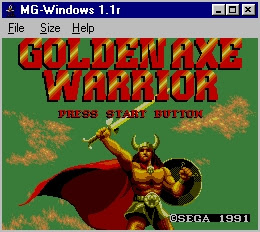
BRSMS (DOS/Golden Axe Warrior)

In addition to running Master System games, it also started running Game Gear games in November 1998. This was followed by the SG-1000 in January 1999, the SC-3000 in March 1999, and the latest version of the emulator in December 1999, the ColecoVision. Despite all this, what attracted the most attention worldwide was the ability to run Master System and Game Gear games at full speed using a 486, a popular computer at the time. In addition, there was sound and voice emulation, and even support for serial cables, another advance for the time. The only drawback of the emulator was that it was necessary to drag games from the folder to the emulator in order for them to run. Since it was a DOS-mode and command-line emulator, some front-ends were released to facilitate its execution.

BrSMS FRONT, BRSMS Brazilian Frontend and BRSMS Emu FrontEnd

The first was BRSMS Emu FrontEnd, created in January 1999 by ReptilE ProductionS. The second was MasterFront, created in March 1999 by Christian Schaefers. The third was BrSMS FRONT, created in January 2000 by Ben Hyland. And the fourth was BRSMS Brazilian Frontend, created in December 2001 by André Luiz Fernandes dos Santos. In August 2011, Ricardo publicly released the emulator's source code. A curious fact.

MasterFront

In November 2000, Ricardo attended the MSX User Meeting, an MSX event in Jaú, in the interior of São Paulo, as he was also a big MSX enthusiast, having created the BRMSX emulator for it in 1997, which was considered the fastest and most accurate emulator at the time. At this event, he had the opportunity to meet the Brazilian Rafael Rigues, known as Sephiroth, who converted the DarcNES emulator to DOS mode, an emulator very similar to BRSMS, as it emulated systems such as Master System, Game Gear, SG-1000 and ColecoVision.

Wednesday, July 26, 2023

The History of the Master System / SG-1000


SG-1000 and Sega Mark III

After the release of the SG-1000 and SG-1000 II consoles in 1983 and 1984, Sega, the classic creator of arcade games since 1973, decided to release a console that would be on par with its rival the Famicom, making some modifications to its hardware. Its name was the Sega Mark III, and it was released in Japan in 1985. Its hardware had a 3.58 MHz NEC 780C central processor (based on the Zilog Z80), 16kb of video RAM and 4 mono sound channels through the SN76489 chip. Its difference from previous Sega models was the 64 total colors and 32 simultaneous colors (the previous ones had only 16 possible colors), the VDP video processor (based on the video chip of the previous versions, the TMS9918) and the 8kb of RAM (the previous ones had 2kb of memory). The Mark III also had an add-on, an optional accessory, that brought FM sound to the console through the YM2413 chip. However, only a few games had this possibility, since they needed to be created for this purpose. Just over 40 games were created with support for FM sound. The Sega Mark III also allowed backwards compatibility, meaning that games from previous versions of the Sega console could be played on the device, either on cartridges or on cards (used in previous consoles through an add-on).

Sega Master System

For its release in the US in 1986, they built a different case for the console and renamed it the Master System. Its only differences from the Sega Mark were the inability to play games from cartridges and cards from the SG-1000, SG-1000 II and Sega Mark III (only with an adapter for cartridge games only) and the lack of support for FM sound, which in the Japanese version, released in 1987, did not exist, since it supported all cartridges and cards from Sega consoles (including the American Master System cartridges) and came with FM sound support integrated into the console, without the need for an add-on. It was common at the time for this difference in compatibility to exist due to the regionality of each console, so as to avoid competition between different countries in the production of games for the same system.

Master System II and III (Boxes)

its hardware superiority over its competitor, the Famicom, which had a CPU of 1.79 MHz versus 3.58 MHz, 2kB of RAM and video versus 8kB of RAM and 16kB of video, and despite 48 total colors and 25 simultaneous colors versus 64 total colors and 32 simultaneous colors, neither in the Sega Mark III era nor in the Master System era did it surpass Nintendo's console in sales. Despite this, it was very successful in Europe and Brazil, being released in 1987 and 1989, respectively. In 1990, Sega released a second version of the console in the US and Europe, called the Master System II, a compact version of the device, later released in Brazil as the Master System III Compact. The Master System II in Brazil, released in 1991, was the same original Master System, but with a lower price and with Alex Kidd In Miracle World in memory.

Master System Games

Among its games, several successful franchises began on the device or came to it from the arcades, such as racing games, such as Enduro Racer, Ayrton Senna's Super Monaco GP ii, Chase HQ, OutRun, Hang-On and Road Rash; puzzle games, such as Flash Point, Lemmings and Columns; sports games, such as FIFA, California Games, World Cup, Sega World Tournament Golf and the Great line of games, such as Golf, Baseball Masketball and others; action/platform games, such as Action Fighter, Alex Kidd, Ghostbuster, Wonder Boy, Ninja Gaiden, Strider, Ghouls 'n Ghosts, Golvellius, Asterix, Sonic Chaos, Kenseiden, Psycho Fox, Jurassic Park, Earthworm Jim and Sonic The Hedgehog; and beat 'em up games, such as Double Dragon, Altered Beast, Golden Axe, Black Belt, Streets of Rage and Renegade. Shmup/shoot em up games include Operation Wolf, After Burner, Space Harrier, Fantasy Zone, Power Strike, R-Type and Galaxian. Fighting games include Virtua Fighter Animation and Mortal Kombat II. And RPGs include Phantasy Star, Golden Axe Warrior and Dragon Crystal. There were also games from companies such as Disney, such as Mickey (Legend, Land and Castle of Illusion), The Lion King, Donald Duck, Aladdin and The Jungle Book. DC Comics, such as The Flash and Batman Returns and Superman: The Man of Steel. Marvel, such as Spider-Man vs. The Kingpin and Return of the Sinister Six, The Incredible Hulk and X-Men: Mojo World. And Warner, such as Taz-Mania and Escape from Mars, Daffy Duck (Daffy Duck In Hollywood), Desert Speedtrap, Cheese Cat-Astrophe, Tom and Jerry (The Movie) and The Flintstones. Anime games were also released, such as Zillion, Borgman and Hokuto no Ken. Although there was no direct competition with the Famicom, the two consoles competed for several ports, such as Aladdin, Alien 3, Asterix, Back to the Future, Battletoads, Bubble Bobble, Juggle Book, Lion King, Operation Wolf, Pacman, Paperboy, Robocop 3, Strider, Terminator, Ninja Gaiden, Double Dragon, Jurassic Park and others. Last but not least, Brazilian games, such as Mônica no Castelo do Dragão, Chapolin x Drácula, Férias Frustradas do Pica-Pau, Castelo Rá-Tim-Bum, TV Colosso and others.

Master System II and III (Consoles)

The console was discontinued in 1989, however, in the USA it continued until 1991 and in Europe until 1996. In Brazil it is still sold today, with games produced in the country until the end of the 1990s. The country in which the console was most successful was undoubtedly Brazil.

Master System releases in Brazil:

Master System (1989)
Master System II (1991)
Master System 3D (1991)
Master System III Compact (1992/1993/1998)
Master System Super Compact (1993)
Master System Super Girl (1993)
Master System III Collection (2002)
Master System III Collection (2004)
Master System III Collection (2005)
Master System III Collection (2006)
Master System III Collection (2007)
Master System III (2008)
Master System III Evolution (2011)
Master System® Plug & Play (2018)
Master System® Portable (2018)

Featured Posts

Blog Index

The History of Arcades Arcade Emulators - Williams Digital Arcade, Sparcade!, Emu / Retrocade Arcade Emulators - MAME Arcade Emulators - Sys...

Popular Posts

Total Pageviews