Monday, August 14, 2023

The History of PC Engine Emulators - Part 2

FPCE (1998)

FPCE

Free PC-Engine Emulator, or simply FPCE, was created in 1998 by Japanese emulator developer Bero. Its first version was released in April 1998 for MS-DOS. The emulator had only one version released. He released the source code for this version and a later version that he never released, both also in April 1998. His interest was to develop a port for PSX, and perhaps run PC Engine CD games on the console, which he never managed to do, with only the PSX port being released with game loading on HuCards, released in July 1998.

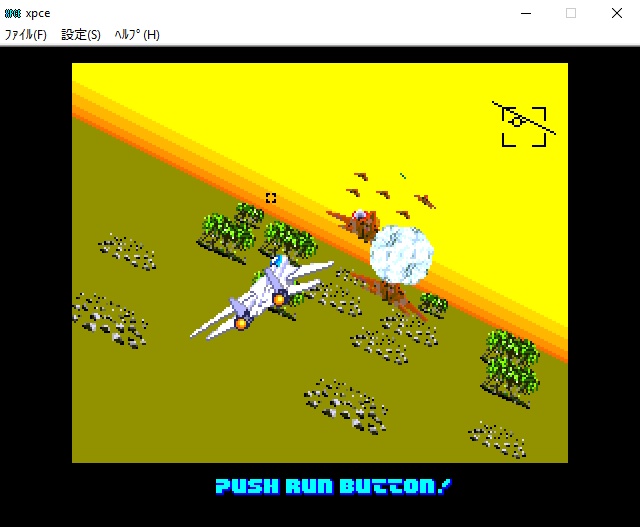
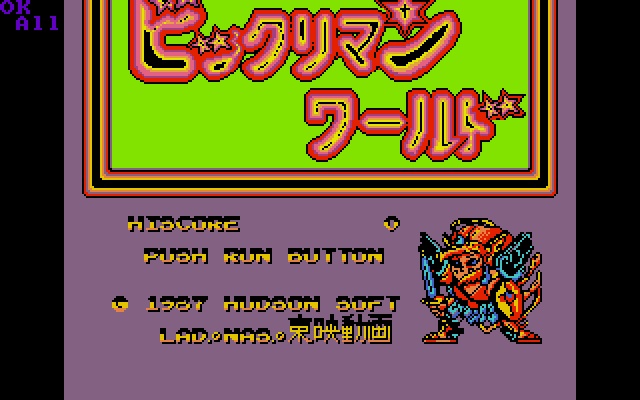
FPCE ( Bikkuriman World )

This version for PSX was considered the second version of the project. The emulator ran games in the VPCE format, from Virtual PC-Engine, and used Marat Fayzullin's 6502 processor, as well as Jens Restemeier's documentation, from Virtual PC Engine. Its version was very early, running few games, but it is worth mentioning as one of the first PC Engine emulators. Bero released the source code early on, in April, helping other creators. The project had only two versions released. Its emulator was ported by the Japanese company HMMX also in April 1998 under the name XPCE (X PC Engine Emulator) for Windows, bringing several improvements, such as better graphics, speed and better sound quality. 

XPCE

Its differential was also its compatibility with DirectX, which was an innovation for games at the time, which also brought a lot of advantage to its port. The first version we found of the emulator is dated July 1998, and the third release, 0.03, received a port for UNIX in the same month. The emulator had fifteen versions in total and ended its activities in May 2000. In its last version, it managed to accelerate the emulation of the CPU core, making the execution of games faster.

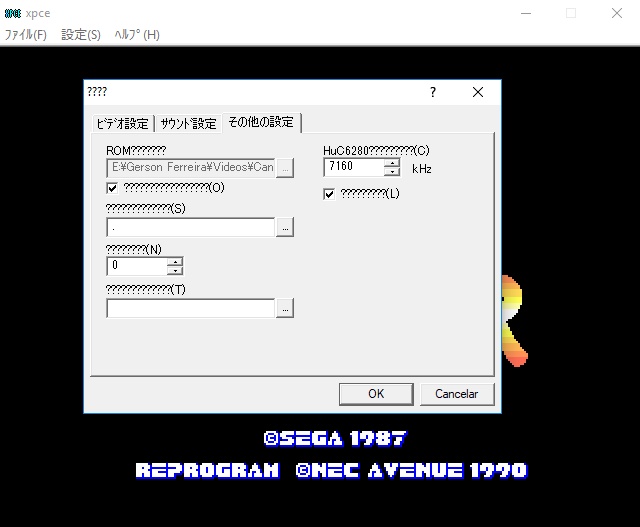
XPCE (Menus)

In March 1999, Youch announced that he was working on a port of the emulator for the Sharp X68000, a well-known and powerful computer at the time, but it was never released. In 2003, the latest version of XPCE was ported to the XBox console by Hikaru as XPCE X and came with a number of new features. It supported English and Japanese languages, a gamepad, pause, full screen, graphic filters, frame skipping, and sound quality and volume controls. The port has five versions in total, all released in 2003.

Hu6280 (1998)

Hu6280 (Intro/Ninja Spirit)

The name Hu6280 was based on the Hudson Soft HuC6280 processor used in the console. The emulator only ran HuCards, the cartridge version of the console. The project was started in 1998 by the Englishman JamSponge, having released its first version in May 1998. It was for MS-DOS and had its own GUI, but came without sound. In the same month, it also added command line support, allowing more flexibility for choosing ROMs, save state and screenshot in .LBM format, which was the image format of a program called DPaint for the Commodore Amiga 1000 PC, in addition to making emulation 50% faster. Also in May, Mr. Kipling, an ASM system specialist, joined the project. In June, it managed to add support for sound, resolution options, vsync, PC-specific gamepads, frameskip, a new command line option and low resolution mode for users with primary PCs. Sound support already came with 11, 22 and 44,000 Hz qualities. In July, stereo sound support was added for sound cards that were compatible with this feature. In August, support for a 6-button joypad was added, making it possible to play Street Fighter, as well as support for two controllers and the PC Engine GT portable. In December, support for CD-ROMs began to be developed. To run it, you only needed a computer with a Pentium 166 MHz speed and 233 MHz if you were going to use sound (the standard at the time for playing without sound, since many emulators in their early days did not support it).

Hu6280 (MS-DOS)

It was initially released only for DOS, with later versions for MacOS in September 1998 by Richard Bannister and for Windows in February 1999 by Jam, known as Huwin. In that month, several betas were released, including Beta 5, which added support for the .INI file for user-defined settings for games and others, and Beta 6, which began supporting SuperGrafx games, a revamped version of the PC Engine HuCards released only in Japan and which ran all the console's games, in addition to five more games released exclusively for it. Although a Windows version had been released days earlier, the StarLaunch front-end, created by Dave Hng, also began supporting the latest DOS version of the Hu6280 released in January in February. In April, a specific front-end for the Hu6280 was created, called HUfe, written by burnworw. Both front-ends ended their support and continuity. In March, the Beta 7 version of the emulator ports it to ASM, making it much faster. Kipling had been promising this port since June 1998. In April, Jam releases a version of the emulator to run on the Nintendo 64, which comes with the homebrew game Galaga '99. In January 2000, after not releasing any other version since May 1999, the project returns and Jam releases the Windows DirectX version. This version also adds support for the joypad via DirectInput and three screen resolution modes. Also in January, Jam releases the Win32 PCERip tool, which serves to rip PCE CD games to the PC and run them on the Hu6280.

Hu6280 (Windows)

The last version of the emulator was released in February 2000, and it began to support PC Engine CD games via .ISO and .TOC files. By the year 2000, the Hu6280 was already running 98% of the ROMs. The MacOS version was released until April 2001, when Bannister began to port the TGemu emulator. The emulator was also influenced by people in the field, such as Emanuel Schleussinger and Paul Clifford, the latter responsible for the port of VPCE to RiscOS, for the console documentation, Jans Restemeier, David Michel and Bero for the influence on their VPCE, Magic Engine and FCPE emulators, and the emulation website Zophar, for the promotion. The PCE microprocessor, the HuC6280, which gives the emulator its name, is a version of the M6502 microprocessor made by another company. It is said that Marat Fayzullin and Alex Krasivsky's M6502 emulator was used in the Jam emulator, but we have no confirmation of this. Hu6280 was ported to GamePark GP2X in 2006 and to Game Cube and Nintendo Wii in 2008. Some interesting facts. Jam and the group that worked with him on the project, known as the Hu6280 Team, released a game for the PC Engine in December 1998 called Jamanoid, a clone of the classic 1986 game Akanoid, which had only been released for NES on home consoles. Jamanoid is a mix of the name JamSponge and Arkanoid. The game had several versions released until January 1999. The only shortcoming of the clone is that it had no sound. Another interesting fact is that around 1999/2000, Jam had planned to release a Hu6280 CD along with games for the console. At the time, they asked for donations of games for the project. They had a list of 117 that they were going to release, 59 American and 68 Japanese, but the release never happened.

Friday, August 11, 2023

The History of PC Engine Emulators - Part 1

VPCE (1997)

VPCE (MS-DOS)

Virtual PC Engine, or simply VPCE, was the first PC Engine emulator. It was created by Jens Christian Restemeier, and its first version, beta 0.1, was released in May 1997 for MS-DOS, with a stable version in June, followed by the Windows version in July 1997 ported by Edward Massey, MageX. Since 1996, Christian has been working with programs that add functions to emulators, such as GB, PSX, PC Engine, and even the Sharp X68k PC. In the preview version of VPCE, it even started to emulate CD-ROM support for games on this media, but in the next version, this support was removed. These versions were alpha and came out before May. Because the Windows version had only one release, the DOS versions were more popular. Because of this, around March 1998 the emulator began to have support in the Universal Frontend front-end, famous for supporting emulators for the most varied consoles and portable devices of the time.

VPCE (Windows)

VPCE was also ported to other systems, such as MacOS (known as Power PC Engine and with the sound code written by Richard Bannister) and BeOS by Jonathan Lane, RiscOS by Paul Clifford, Linux by Steven Fuller and FreeBSD, NetBSD, OpenBSD, Unix, SunOS and Solaris by Osamu Kurati. All of them were also ported in 1997. The emulator had two more versions released for MS-DOS, in July 1997 and in November 1997, when the project was closed. In February 1998, it was announced that there would be a version 0.4 of the emulator, which would run the game Street Fighter II - Champion Edition, but this release never happened. Curiosity. Before the VPCE project, in 1996, Jens created another game hardware emulator, the Gameboy GBSIM, discontinued in the same year.

Magic Engine (1997)

Magic Engine (MS-DOS)

Magic Engine was a PC Engine emulator created by Frenchman David Michel, and first released in October 1997 for MS-DOS. Later, his brother Cedric Michel joined the project. Interestingly, in the first version, in addition to running PC Engine HuCards (cartridge) games, it also ran PC Engine CD games, making it the first PC Engine CD emulator. But this prominence came at a price, $35. The demo versions only gave 4 minutes of gameplay.

Magic Engine v0.9 (Windows) (Bomber Man/Menus)

Since there was only a version for MS-DOS, around January 1998, it began to be supported by the Universal Frontend, alongside other famous emulators of the time. In November 1999, it was part of the ArcadeOS frontend, by Brian Lewis. And finally, around April 2003, it began to be part of the Greek frontend, Translations Frontend, of the Greek ROM site, GreekRoms. The frontend was available in both Greek and English. In September 1999, Magic Engine managed to emulate HuCards at 100% and in October 1999, CD-ROM emulation. The emulator had seven alpha versions from October 1997 to December 1999.

Magic Engine v1.1.3 (Interface/Menus)

The first beta version was 0.97 in December 1999 for Windows and MacOS. There were two more beta versions that month. From these versions forward, the emulator began to be sold for 16 dollars. One of the interesting things about the project is that it made versions of the website available in several languages, such as German, Japanese, French, Italian, Spanish, Portuguese and English, having supported Portuguese until 2001, and until 2002 the other languages, except English, French and Japanese, which it maintained from then on. Until June 2002, it had regular updates. After that, there were only three more versions in 2005, 2007 and the last one in May 2008.

Magic Engine (Bomber Man '94)

Regarding its front-end, it always uses the same MS-DOS version, and migrates it to the Windows version in December 1999, with some color modifications, additions and changes to menus. In version 1.0 from April 2005, it makes another modification to the front-end, with more menu modifications and changes to them, in addition to the background wallpaper. The recommended configurations for the perfect execution of the emulator are a Pentium III 600 MHz, with 512 MB of RAM, GeForce 2 or Radeon 7500 with a Sound Blaster.

Magic Engine v0.9 (Interface/Menus)

Magic Engine also provided access to accessories that increased the console's RAM, such as the System Card, Super CD-ROM and Arcade Card. It also had its own music player, MagicSystem, the Cheat Engine cheater, support for ROM patches, IPS, among others. In 2006, the duo David and Cedric began working on another emulator, Magic Engine FX, the successor to the PC Engine, PC-FX. The emulator was released in December 2006 and has four versions in total, with the last release in February 2008. Like their previous project, the full version is also paid.

Tuesday, August 8, 2023

The History of the PC Engine - Foreword

PC Engine and TurboGrafx-16

The PC Engine, or TurboGrafx-16 in the US, was launched by NEC in partnership with Hudson Soft in Japan in 1987 to compete with the Nintendo. Although it was considered a generation ahead of its competitor, its central processor, the HuC6280, was 8-bit. Its video chip was 16-bit, providing excellent video quality, with a palette of 512 colors, while the Nintendo console had 48. All of the console's processors and chips were manufactured by Hudson Soft. The console did not work with cartridges, but rather with a system called HuCard, which were thick cards. Despite the launch of the American version in 1988, it was soon overtaken in the West by the Mega Drive. Despite this, it was a success in its home country.

PC Engine CD: CD-ROM² and Super CD-ROM²

In 1988, NEC released an add-on called CD-ROM², known as PC Engine CD, which came with the consoles in HuCards and CD-ROMs fitted side by side, bringing digital media support to the console, with more space for sprites, parallax, instrumental music and cut scene animations. Later, the Sega CD imitated this model. A second version, called Super CD-ROM² was released in 1991, expanding the device's RAM from 64kb to 256kb.

PC Engine Duo, PC Engine Duo-R and PC Engine Duo-RX

Arcade Card Duo and Arcade Card Pro

In the same year, the PC Engine Duo was released, which combined the PC Engine HuCards with the Super CD-ROM² in a single device, supporting HuCard, CD-ROM² and Super CD-ROM² games. Two variations of this console were released in 1993 and 1994, the PC Engine Duo-R and PC Engine Duo-RX. In 1994, the Arcade Card was also released, which expanded the console's RAM to 2 MB, for higher quality games. Two versions were released: the Arcade Card Duo for the PC Engine CD-ROM², and the Arcade Card Pro, for the Super CD-ROM². With the exception of this expander, all other add-ons and versions of the console were released in the USA. NEC released 17 different models of PC Engine and TurboGrafx-16.

HuCard Games (PC Engine)

Franchises such as Twin Cobra, Bomberman, Castlevania, Galaga and Ninja Gaiden were successful on the console. Its biggest competition was with the Mega Drive, given the interest of both in ports of arcade games. Among them, we have After Burner II, Splatterhouse, Aeroblasters, Bonanza Bros, Cadash, Chase HQ, Golden Axe, Altered Beast, Out Run, Puyo Puyo, SF II: Champion Edition, Art of Fighting, among others. Shmups were another big brand of the console, among them Parodius, R-Type, Violent Soldier, Soldier Blade, Chou Aniki, Spriggan Mark 2, Psychosis, Air Zonk, Lords of Thunder, Forgotten Worlds, Blazing Lazers and Magical Chase. Games with anime themes, we had Bubblegum, Sailor Moon, Dragon Ball Z, Doraemon and Yu Yu Hakusho.

PC Engine CD Games

In addition, we had racing games, such as Power Drift, Victory Run, Road Spirits and Final Lap Twin. Sports games, such as Formation Soccer, J. League, Nekketsu Koukou, Tecmo World Cup and TV Sports. Adventure games, such as Bonk's Adventure, Ninja Spirits, Cadash, Neutopia, Wonder Boy, Adventure Island, Buster Bros and Bomberman, and others. Run and gun games, such as Bloody Wolf, Mystic Formula, Horror Story. Beat 'em up games, such as Double Dragon, Riot Zone, Crest of Wolf, Cyber ​​Cross, River City. Fighting games, such as World Heroes 2, Fighting Street, and the aforementioned SF II and AOF. RPG games, such as Tengai Makyo, Momotaru Densetsu, Dragon Slayer, Exile, Alnam no Kiba, Star Breaker. Disney games, such as Darkwing Duck and TaleSpin. Among many others. The console was discontinued in 1995.

Featured Posts

Blog Index

The History of Arcades Arcade Emulators - Williams Digital Arcade, Sparcade!, Emu / Retrocade Arcade Emulators - MAME Arcade Emulators - Sys...

Popular Posts

Total Pageviews